
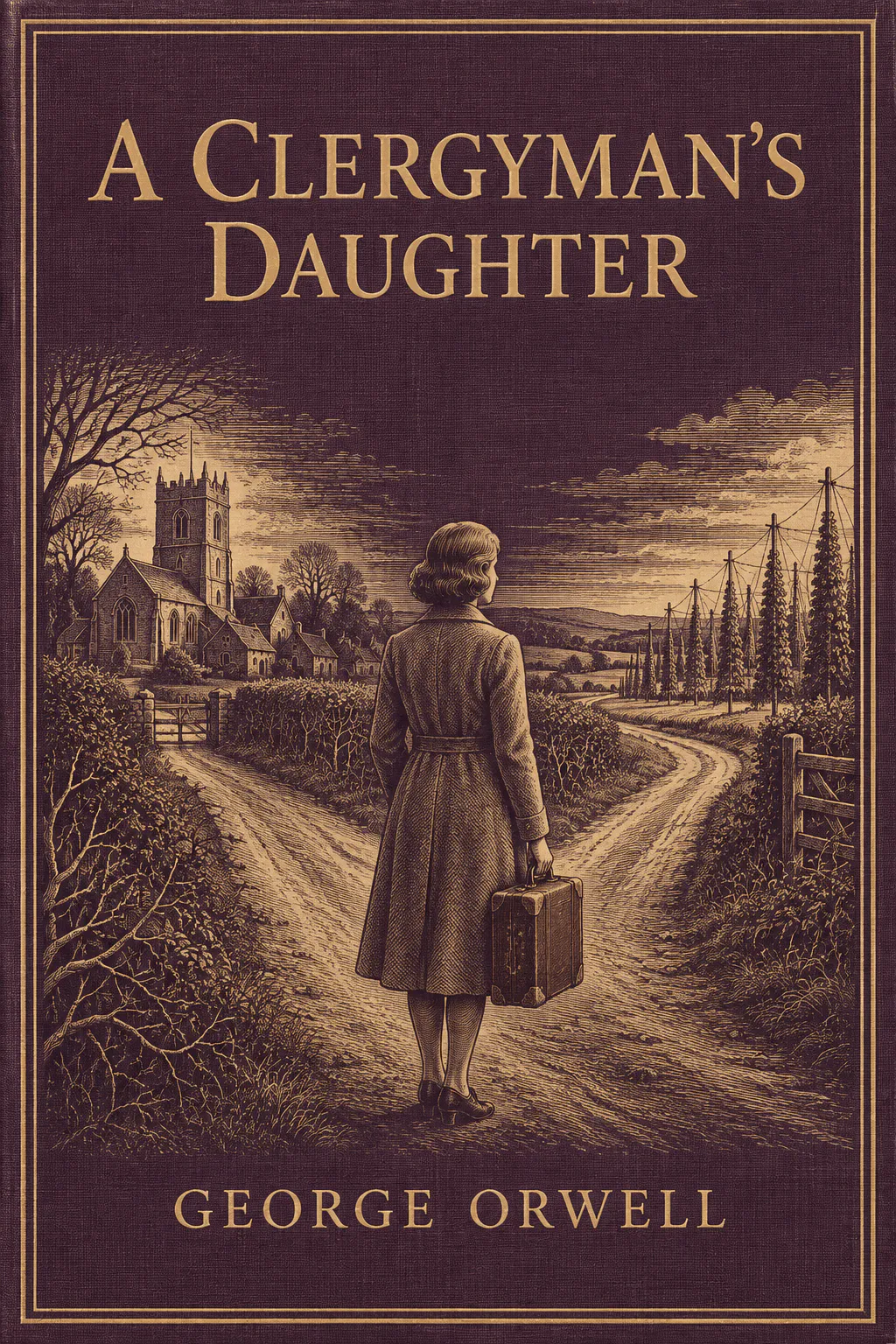
A Clergyman's Daughter
George Orwell
Contains spoilers for the entire book.
Discussion topics
Topic 01 of 08
A day at the rectory
What does the opening day of cold baths, early Communion, unpaid bills and parish visits tell you about the life Dorothy has made for herself?
Keep the conversation going
- Why do you think she pricks her own arm with a pin whenever her mind wanders?
- How much of her exhaustion comes from her father, and how much from her own sense of duty?
There is no single right answer. Bring your own reading.
Discussion topics
What does the opening day of cold baths, early Communion, unpaid bills and parish visits tell you about the life Dorothy has made for herself?
Keep the conversation going
- Why do you think she pricks her own arm with a pin whenever her mind wanders?
- How much of her exhaustion comes from her father, and how much from her own sense of duty?
What did you make of Mr Warburton, the one person in Knype Hill who talks to Dorothy as an equal and the one who frightens her most?
Keep the conversation going
- Why does Dorothy keep visiting him despite what the town says about him?
- How does Mrs Semprill's gossip turn a single evening into a story the whole town believes?
Why do you think Orwell has Dorothy lose her memory rather than simply run away?
Keep the conversation going
- What does she discover about herself once she no longer knows who she is supposed to be?
- How did you feel about how easily she falls in with Nobby and his friends?
Why does Dorothy find a kind of happiness in the hop fields, despite the dirt, the cold and the pay?
Keep the conversation going
- What do the hop-pickers' lives show about work that the rectory never could?
- How does the moment she reads her own name in a newspaper change things for her?
Why do you think Orwell writes the night in Trafalgar Square as a play rather than as ordinary prose?
Keep the conversation going
- Which of the voices in that scene stayed with you, and why?
- What does Mrs McElligot's company give Dorothy that her old life did not?
What does Mrs Creevy's school reveal about how children were educated, and who it was really run for?
Keep the conversation going
- Why do Dorothy's attempts to teach the girls properly end so badly?
- Who comes out worse in that chapter: Mrs Creevy, the parents or the system that lets them be?
How does Dorothy lose her faith, and what is left of her once it has gone?
Keep the conversation going
- Do you agree with her that the outward forms of religion are still worth keeping up?
- What does Mr Warburton's argument on the train home leave unanswered for her?
How did you feel about the ending, with Dorothy gluing costumes in the rectory as if nothing had happened?
Keep the conversation going
- Why do you think she refuses Mr Warburton's proposal on the way back?
- Is her return a defeat, a kind of courage, or something Orwell leaves for us to decide?
There is no single right answer. Bring your own reading.