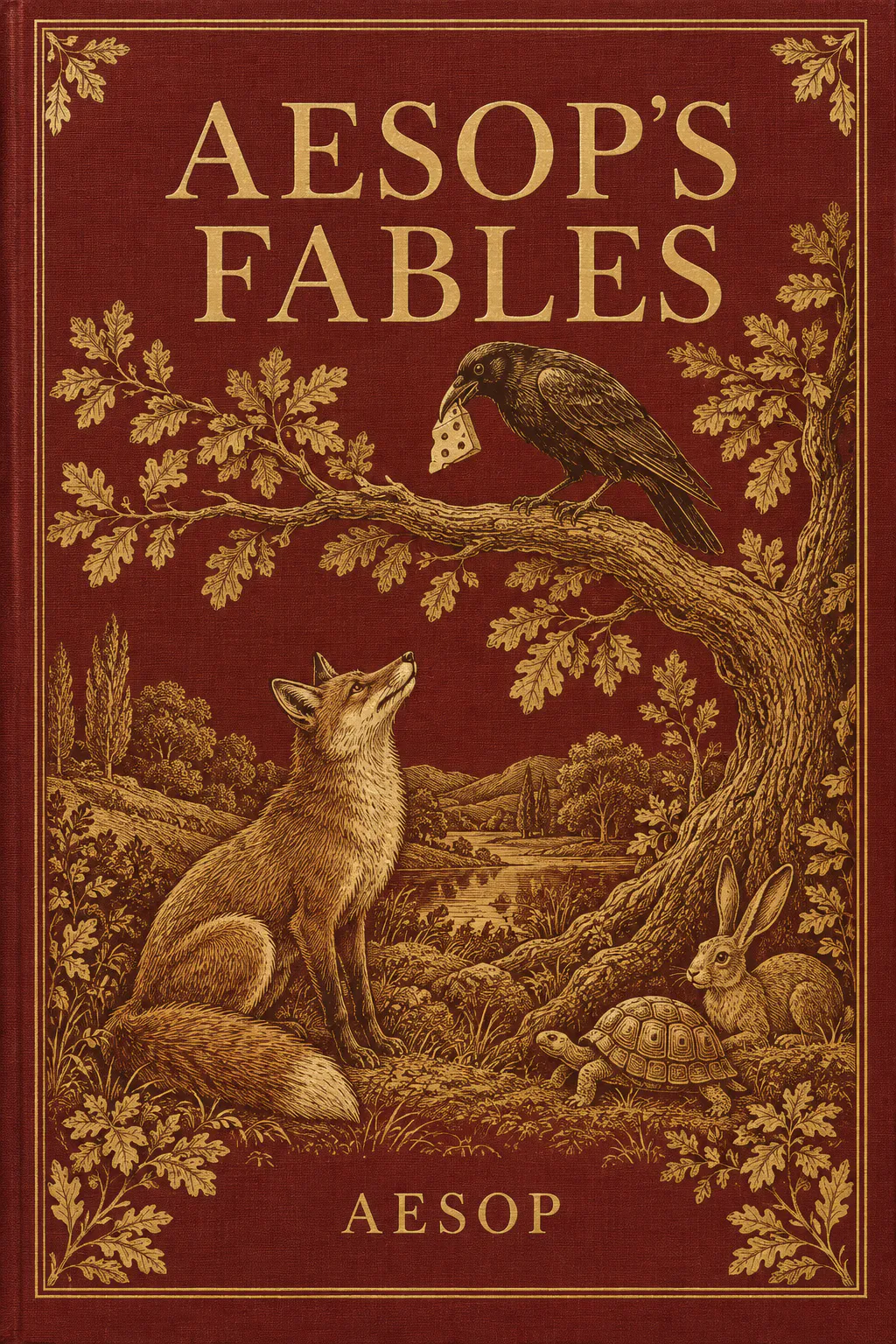
Aesop's Fables; a new translation
Aesop
Contains spoilers for the entire book.
Discussion topics
Topic 01 of 08
Short and sharp
What makes a fable different from a fairy tale or a short story?
Keep the conversation going
- Why do you think these short tales have lasted for more than two thousand years?
- Which fable did you know before you opened the book, and did it read as you remembered?
There is no single right answer. Bring your own reading.
Discussion topics
What makes a fable different from a fairy tale or a short story?
Keep the conversation going
- Why do you think these short tales have lasted for more than two thousand years?
- Which fable did you know before you opened the book, and did it read as you remembered?
What did you make of G. K. Chesterton's argument in the introduction about why fables use animals?
Keep the conversation going
- Do you agree that the animals must be fixed characters, like pieces on a chessboard?
- How did the introduction change your reading of the fables?
How did you respond to the moral given at the end of each fable?
Keep the conversation going
- Did the moral always match the story you had just read?
- Are fables better with the moral spelled out or left for the reader?
What do fables like "The Wolf and the Lamb" say about power and the excuses of the powerful?
Keep the conversation going
- Why does the lamb's reasoning do it no good?
- Where have you seen the wolf's logic in real life?
Which of the clever animals in these fables, the fox, the crow with the pitcher, the mouse, did you admire most?
Keep the conversation going
- When is cleverness a virtue in the fables, and when a trap?
- Why does the fox so often lose as well as win?
What do "The Grasshopper and the Ants" and "The Hare and the Tortoise" teach about work and patience?
Keep the conversation going
- Are the ants kind or simply prudent?
- Do those lessons still hold for us?
What does "The Shepherd's Boy and the Wolf" say about trust and lying?
Keep the conversation going
- Which other fables are about honesty or its lack?
- How do you think children understand these fables differently from adults?
How did Arthur Rackham's illustrations shape your reading of this edition?
Keep the conversation going
- Which picture best caught the spirit of its fable?
- Which fable would you choose to read to a child, and why?
There is no single right answer. Bring your own reading.