
An Inquiry into the Nature and Causes of the Wealth of Nations
Adam Smith
Book Club
An Inquiry into the Nature and Causes of the Wealth of Nations
8 ways to start a deeper conversation.
Contains spoilers for the entire book.
Discussion topics
Topic 01 of 08
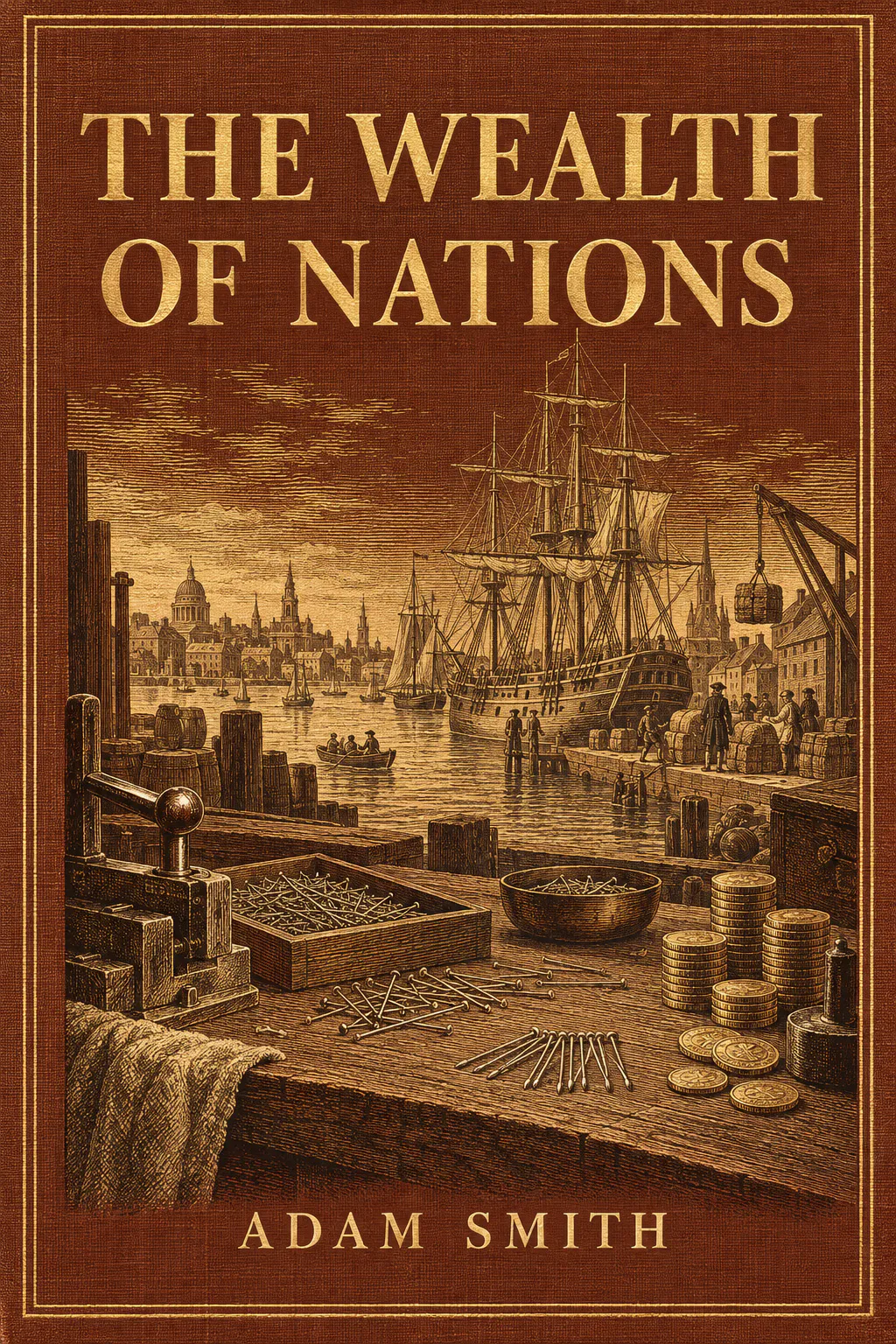
The pin factory
Why does Smith open with a pin factory, and how convincing is his case that the division of labour is the source of wealth?
Keep the conversation going
- What does a worker gain and lose by doing only one small task all day?
- Where do you see the division of labour at work in your own life?
There is no single right answer. Bring your own reading.
Discussion topics
Why does Smith open with a pin factory, and how convincing is his case that the division of labour is the source of wealth?
Keep the conversation going
- What does a worker gain and lose by doing only one small task all day?
- Where do you see the division of labour at work in your own life?
What did you make of Smith's line that we expect our dinner not from the benevolence of the butcher, the brewer or the baker, but from their regard to their own interest?
Keep the conversation going
- Is self-interest, on Smith's account, the same as selfishness?
- What keeps self-interest from becoming harmful, in his view?
What does Smith actually mean when he writes of an invisible hand, and how does it differ from the way the phrase is used today?
Keep the conversation going
- Why does he think a merchant who intends only his own gain often serves the public better than one who sets out to?
- Are there cases where the invisible hand fails?
Why is Smith so suspicious of merchants and manufacturers, warning that people of the same trade seldom meet without a conspiracy against the public?
Keep the conversation going
- How does that suspicion fit with his defence of free markets?
- Whose interests does he most want the law to protect?
What is the mercantile system Smith attacks, and why does he think a nation's wealth is not its gold and silver?
Keep the conversation going
- How does he argue against tariffs and monopolies?
- Do his arguments still shape debates about trade today?
What does Smith say about wages, and why does he think high wages are good for a society?
Keep the conversation going
- How did you respond to his remark that no society can be flourishing and happy if most of its members are poor and miserable?
- Does he side with workers more than his reputation suggests?
Why does Smith worry that the division of labour may make workers stupid and ignorant, and what does he propose to do about it?
Keep the conversation going
- Is his call for public education a surprise in a book about free markets?
- How does this worry sit beside his praise of the pin factory?
How does Smith judge the colonies and Britain's quarrel with America, published in the very year of the Declaration of Independence?
Keep the conversation going
- Why does he think the monopoly of colonial trade hurt Britain itself?
- What role does Smith leave for government by the end of the book?
There is no single right answer. Bring your own reading.