
Ciuleandra
Liviu Rebreanu
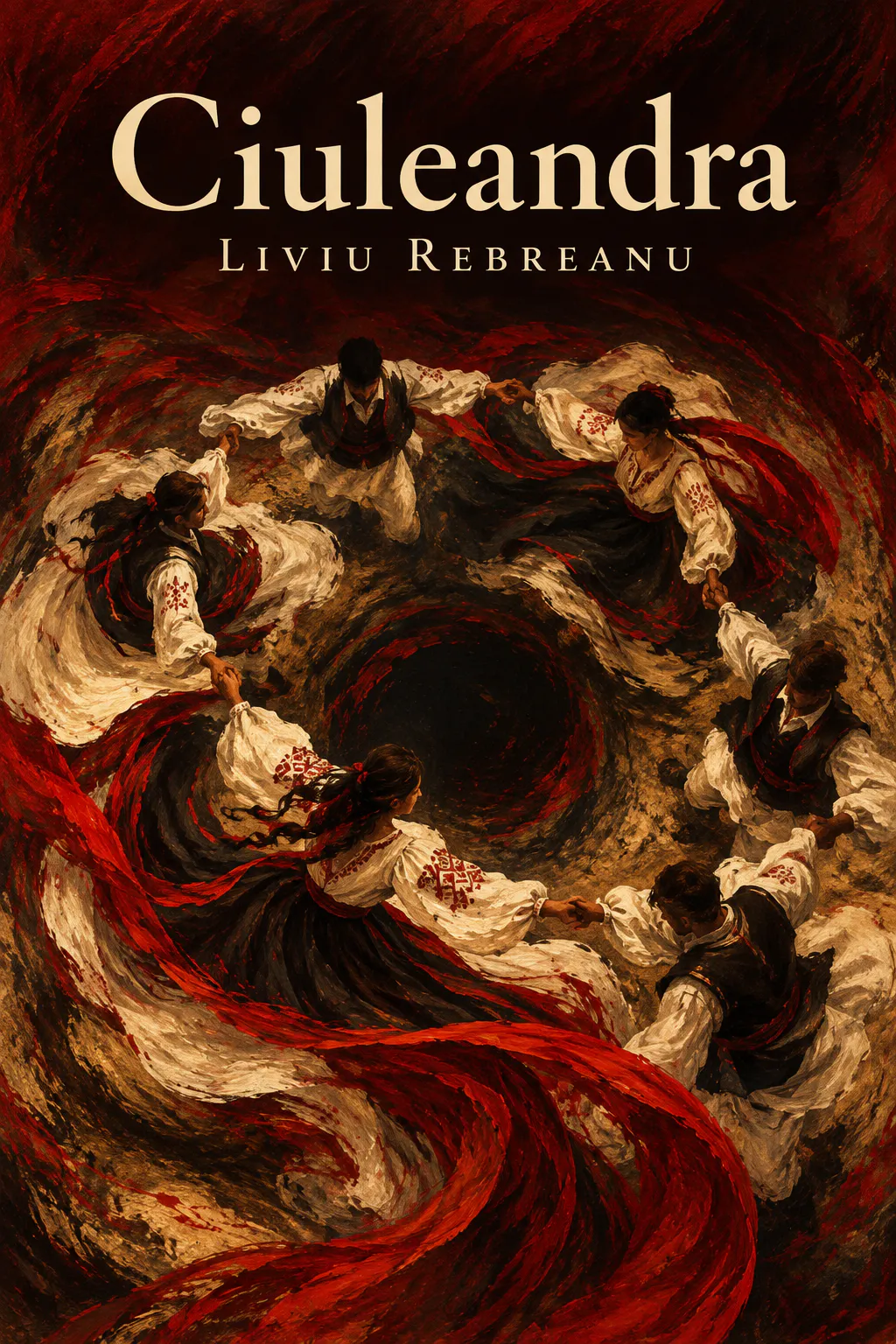
Ciuleandra
Puiu Faranga, the heir of an old boyar family, strangles his wife Mădălina in a fit of rage. To spare him prison, his father has him committed to a sanatorium as a madman. There, alone with his memories, Puiu returns again and again to the village feast where he first saw Mădălina dancing the Ciuleandra — and the dance's quickening rhythm begins to take hold of his mind.
About the book
Published in 1927, Ciuleandra is Liviu Rebreanu's short psychological novel, written between his great rural novels and named after a whirling Romanian folk dance. Its hero, the young aristocrat Puiu Faranga, has killed his wife in a moment of blind fury, and his influential father arranges for him to be placed in a sanatorium so that he can be declared insane rather than tried. What begins as a pretence becomes a descent. Watched by the doctors and left with nothing but his thoughts, Puiu relives his marriage to a peasant girl he chose for her vitality, and the question of why he killed her gives way to an obsession with the dance itself. Rebreanu turns a crime story into a study of guilt, class and the fragile border between feigned madness and real. This edition is the original Romanian text.
Characters
Puiu Faranga — Protagonist
The young heir of an old boyar family who kills his wife in a moment of rage and is committed to a sanatorium.
Mădălina — Puiu's wife
The peasant girl Puiu first saw dancing the Ciuleandra and married for her vitality.
Policarp Faranga — Puiu's father
An influential aristocrat who has his son declared insane to spare him trial.
Doctor Ursu — Director of the sanatorium
The doctor who observes Puiu as his pretence of madness turns into the real thing.
About the author
Liviu Rebreanu (1885–1944) was a Romanian novelist and playwright, widely regarded as a founding figure of the modern Romanian novel. Known for his realism and psychological depth, he explored rural life, social inequality, and the conflicts between personal desire and moral responsibility. His most celebrated novels, Ion and Forest of the Hanged, remain essential works of Romanian literature.