
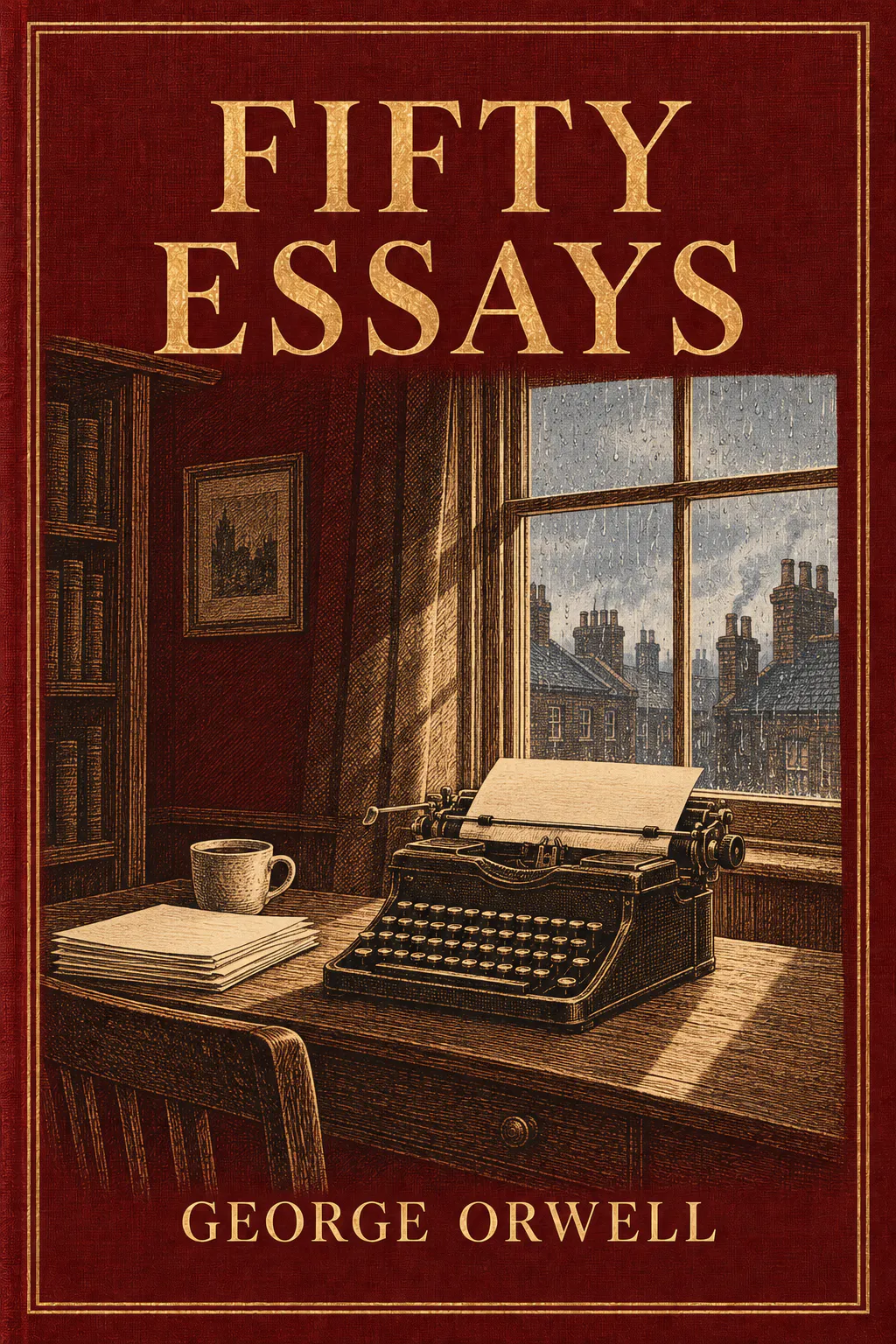
Fifty Essays
George Orwell
Contains spoilers for the entire book.
Discussion topics
Topic 01 of 08
Shooting an Elephant
Why does the narrator shoot the elephant when he knows he does not need to?
Keep the conversation going
- What does he mean when he says the white man in the East becomes a sort of hollow, posing dummy?
- How does the slow death of the animal shape what the essay is really about?
There is no single right answer. Bring your own reading.
Discussion topics
Why does the narrator shoot the elephant when he knows he does not need to?
Keep the conversation going
- What does he mean when he says the white man in the East becomes a sort of hollow, posing dummy?
- How does the slow death of the animal shape what the essay is really about?
What is it about the prisoner stepping aside to avoid a puddle that changes the narrator's understanding of what is about to happen?
Keep the conversation going
- Why do you think the men laugh and drink together once the hanging is over?
- How does Orwell manage to make an argument against capital punishment without stating one?
Which of the four motives Orwell names for writing, from sheer egoism to political purpose, do you see most clearly in the essays themselves?
Keep the conversation going
- What does he mean by wanting to make political writing into an art?
- Do you believe him when he says that whenever he lacked a political purpose he wrote lifeless books?
Why does Orwell think bad English and bad politics feed on each other?
Keep the conversation going
- Which of his six rules do you find most useful, and which most often broken?
- Where do you hear the kind of language he warns about today?
What did school teach the young Orwell about money, class and guilt, beyond its lessons?
Keep the conversation going
- How did you respond to his account of being beaten for wetting the bed?
- How far can an adult trust his memory of childhood, and does it matter here?
What does Orwell mean by nationalism, and why does he use the word for loyalties far wider than love of a country?
Keep the conversation going
- Which of the habits of mind he describes did you recognise, in others or in yourself?
- Why does he think intelligent people are especially prone to it?
What do essays like "Some Thoughts on the Common Toad", "A Nice Cup of Tea" and "Books vs. Cigarettes" add to our picture of Orwell?
Keep the conversation going
- Why does he think a love of spring and ordinary pleasures is itself political?
- Which of his small pleasures, or his rules for tea, would you argue with?
How does Orwell decide whether to admire a writer or public figure whose views he dislikes, from Kipling and Dali to Wodehouse and Gandhi?
Keep the conversation going
- What did you make of his line that saints should always be judged guilty until they are proved innocent?
- Is it possible to separate a writer's work from the person, on Orwell's terms?
There is no single right answer. Bring your own reading.