
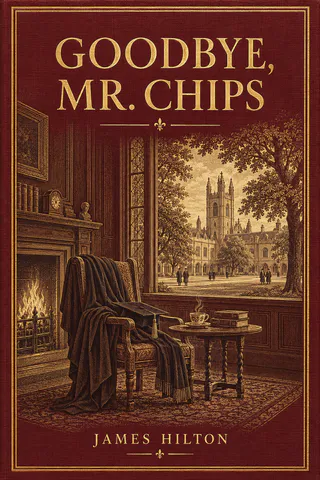
Goodbye, Mr. Chips
James Hilton
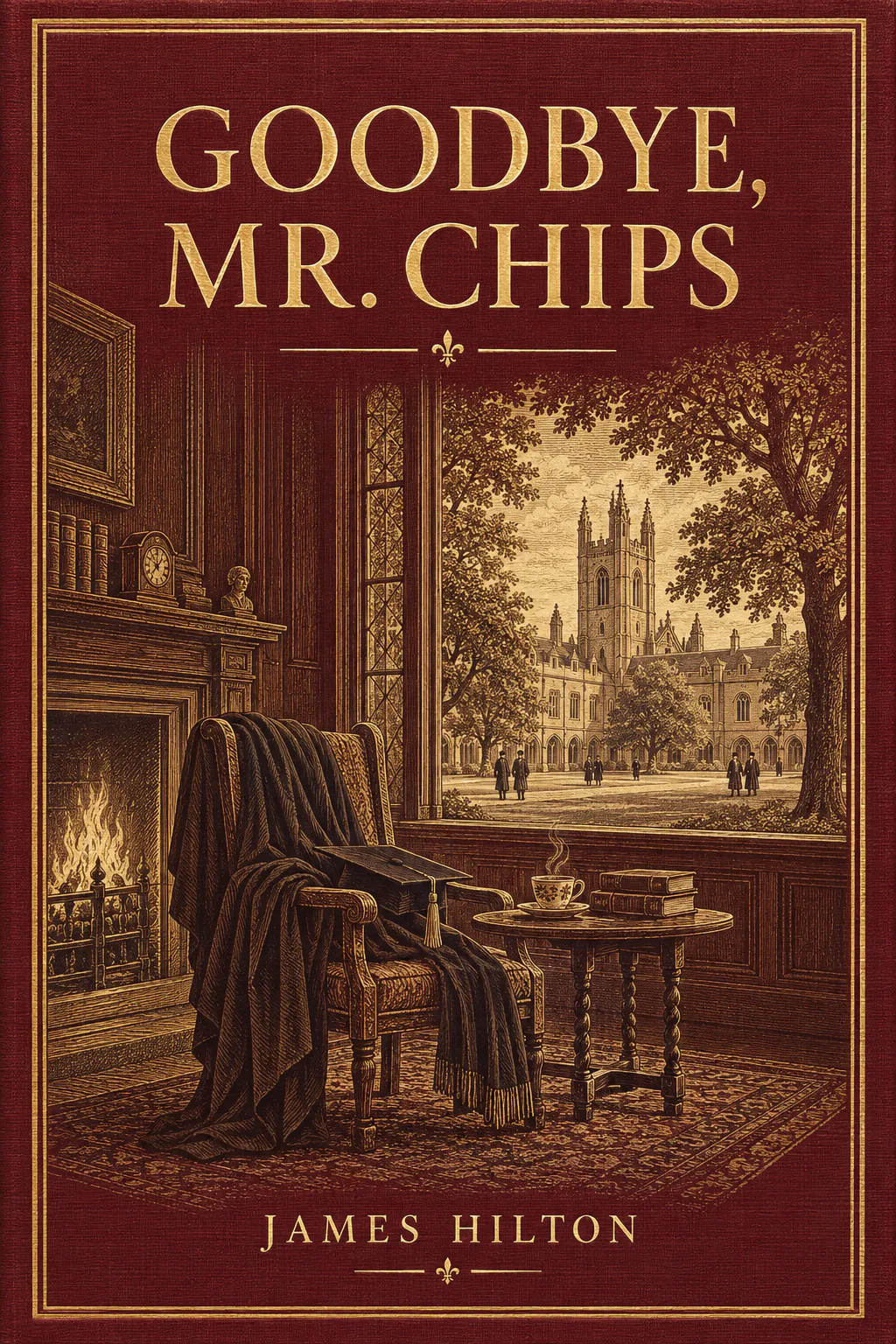
Goodbye, Mr. Chips
3.98from 15,778 ratingson Goodreads
Mr. Chipping taught Latin at Brookfield, a middling English boarding school, for more than forty years. Old and retired across the road, he remembers the boys, the wars, and the brief marriage that changed him. Hilton's short novel of a schoolmaster's life (1934).
Contains spoilers for the entire book
- Themes
- Atmosphere
About the book
Published in 1934, Goodbye, Mr. Chips is a short novel about Mr. Chipping, known to generations of boys as Chips, who taught Latin at Brookfield, an English boarding school of modest reputation. Long retired and living in lodgings across the road, he sits by the fire and remembers the pupils, colleagues and changes of more than sixty years. James Hilton tells the story through Chips’s memories, from his stiff early years as a schoolmaster to the late marriage that softened him and the wartime years when the school called him back. Gentle, funny and quietly moving, the book is a portrait of a modest life given over to an institution, and of the affection that such a life can earn.
Characters
Mr. Chipping (Chips) — Protagonist
A longtime teacher at Brookfield who looks back on generations of pupils and the changing life of the school.
Katherine Bridges — Chips's wife
An independent young woman whose warmth transforms Chips's manner and outlook.
Mr. Wetherby — Headmaster
The Brookfield headmaster who welcomes the young Chipping at the beginning of his career.
Mr. Ralston — Headmaster
An ambitious modernizer whose plans bring him into conflict with Chips.
Herr Staefel — Fellow teacher
A younger German colleague whose friendship with Chips extends to a visit to his home in Wiesbaden.
About the author
James Hilton (1900–1954) was an English novelist and screenwriter, born in Leigh, Lancashire, the son of a schoolmaster. He was educated at The Leys School and at Christ’s College, Cambridge, and published his first novel, Catherine Herself, in 1920, while still a student. For more than a decade he worked as a journalist and reviewer while writing novels that sold modestly, until Lost Horizon (1933), which won the Hawthornden Prize, and Goodbye, Mr. Chips (1934), drawn partly on his school and on his father, made him internationally famous. Lost Horizon later became the first title of the American paperback publisher Pocket Books. Hilton moved to Hollywood in the late 1930s, where several of his books were filmed, and he shared an Academy Award for the screenplay of Mrs. Miniver (1942). His later novels include Random Harvest (1941). He died in Long Beach, California, in 1954.