
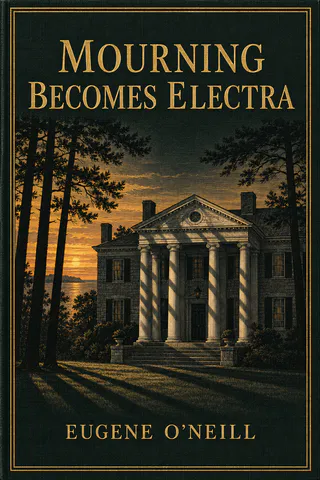
Mourning Becomes Electra
Eugene O'Neill
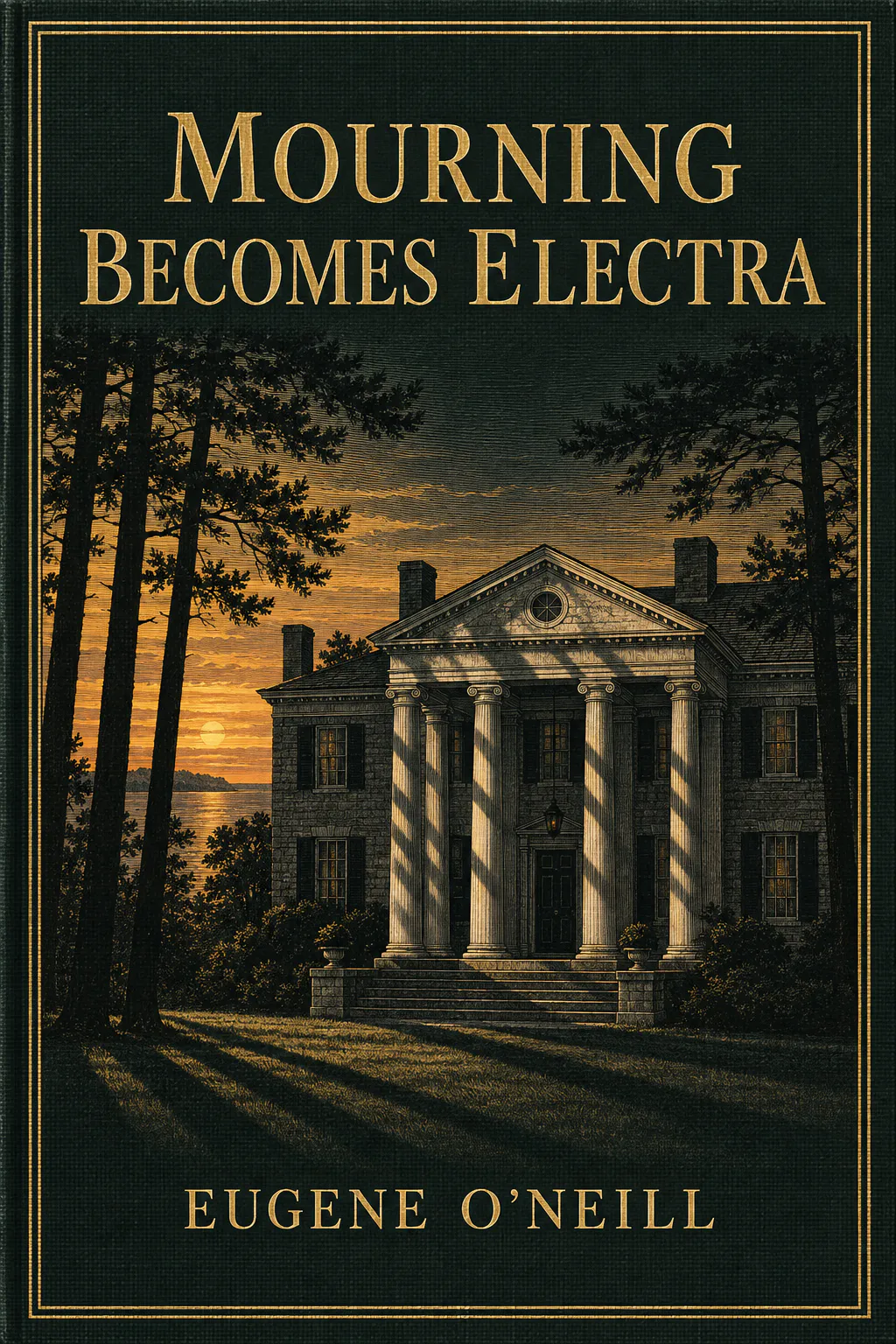
Mourning Becomes Electra
3.98from 5,340 ratingson Goodreads
O'Neill sets the Oresteia in New England at the end of the Civil War: General Ezra Mannon comes home to a wife who hates him and a daughter who adores him, and the Mannons' house becomes the scene of a family's doom. A trilogy of plays: Homecoming, The Hunted and The Haunted (1931).
Contains spoilers for the entire book
- Themes
- Atmosphere
About the book
First staged in 1931, Mourning Becomes Electra is Eugene O’Neill’s trilogy of plays, Homecoming, The Hunted and The Haunted, that transposes Aeschylus’s Oresteia to New England at the end of the American Civil War. General Ezra Mannon returns from the war to a household where his wife Christine and his daughter Lavinia are locked in bitter rivalry. O’Neill replaces the Greek gods with the pressures of family history, repression and desire, and lets the Mannon house, with its pillared front like a temple, hang over each generation. Long, austere and intense, the trilogy is among the most ambitious works of the American theatre, and was a major part of the achievement recognised by O’Neill’s Nobel Prize in 1936.
Characters
Lavinia Mannon — Daughter
A stern young woman fiercely attached to her father and suspicious of her mother's secret life.
Christine Mannon — Mother
Ezra's wife, whose desire to escape an oppressive marriage deepens the family's conflict.
Ezra Mannon — Father
A Union general returning to a household whose outward dignity conceals estrangement.
Orin Mannon — Son
A returning soldier emotionally bound to his mother and burdened by his wartime experience.
Adam Brant — Sea captain
A captain whose relationship with Christine connects private desire to old Mannon grievances.
Peter Niles — Lavinia's suitor
A family friend who offers Lavinia the possibility of a life beyond the Mannon household.
Hazel Niles — Orin's friend
Peter's sister, whose affection for Orin stands apart from the family's destructive attachments.
About the author
Eugene O’Neill (1888–1953) was an American playwright, born in a New York hotel room, the son of the actor James O’Neill, who spent much of his career touring in The Count of Monte Cristo. After an unsettled youth, including years at sea and a bout of tuberculosis, he began writing plays, and his work was first staged by the Provincetown Players in 1916. He brought a new seriousness and ambition to the American theatre, experimenting with masks, interior monologue and Greek tragedy, and won four Pulitzer Prizes, for Beyond the Horizon, Anna Christie, Strange Interlude and Long Day’s Journey into Night. In 1936 he became the first American dramatist to receive the Nobel Prize in Literature. His late masterpieces include The Iceman Cometh and Long Day’s Journey into Night, an autobiographical play staged only after his death in Boston in 1953.