
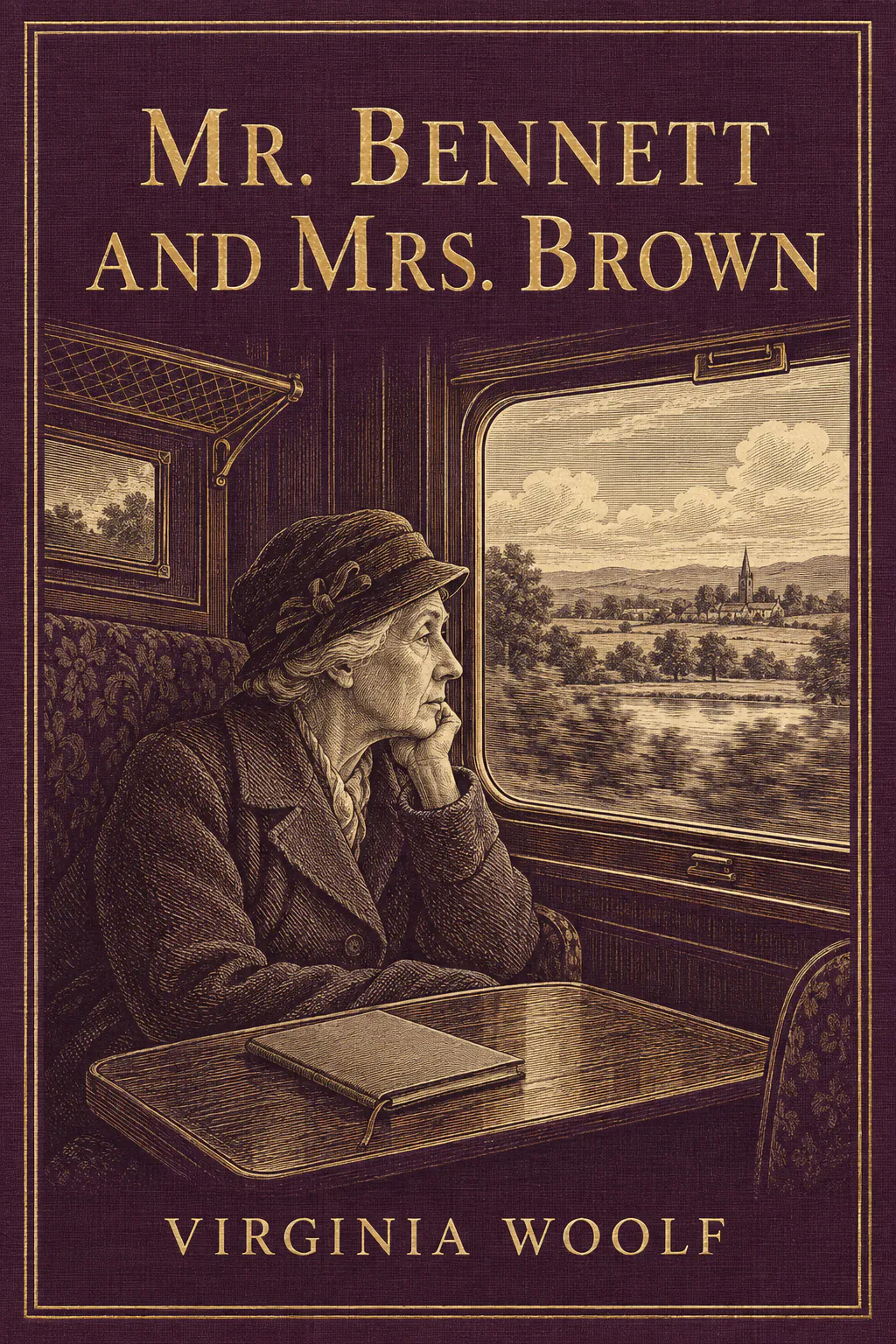
Mr. Bennett and Mrs. Brown
Virginia Woolf
Contains spoilers for the entire book.
Discussion topics
Topic 01 of 08
Meeting Mrs. Brown
What made Mrs. Brown feel vivid to you during Woolf’s account of the train journey?
Keep the conversation going
- Which small detail did the most to suggest a life beyond the carriage?
- How did the absence of a resolved story affect your interest in her?
There is no single right answer. Bring your own reading.
Discussion topics
What made Mrs. Brown feel vivid to you during Woolf’s account of the train journey?
Keep the conversation going
- Which small detail did the most to suggest a life beyond the carriage?
- How did the absence of a resolved story affect your interest in her?
Where do you draw the line between what Woolf notices about her fellow passengers and what she imagines about them?
Keep the conversation going
- How do her guesses about Mrs. Brown’s family influence your sympathy?
- What risks and possibilities arise when a writer builds a person’s life from a brief encounter?
How convincing is Woolf’s account of changing relationships as a reason for changing fiction?
Keep the conversation going
- What does the example of the Victorian and Georgian cooks help you see, and what might it leave out?
- How does her later description of Mrs. Brown as enduring human nature sit beside her claim that character changed around 1910?
How fair do you find Woolf’s criticism of the attention Bennett gives to houses and property?
Keep the conversation going
- What might those details tell a reader about Hilda that Woolf’s preferred approach would miss?
- When does a description of someone’s surroundings bring them closer, and when does it obscure them?
What does Woolf’s comparison between literary conventions and a hostess discussing the weather suggest about reading?
Keep the conversation going
- What familiar features help you enter a book before it asks something more difficult of you?
- How can that familiarity become the obstacle Woolf describes?
How persuasive is Woolf’s defence of difficult or fragmentary writing?
Keep the conversation going
- What do her mixed reactions to Joyce and Eliot add to her argument?
- How would you distinguish an experiment worth following from one that gives you too little in return?
What responsibility does Woolf’s closing appeal place on readers, and how do you respond to it?
Keep the conversation going
- How might trusting your own experience change the way you discuss a book?
- What tension is there between demanding truthful writing and tolerating the failures she asks us to accept?
If Woolf's Mrs Brown boarded a train today, how would a modern novelist try to catch her?
Keep the conversation going
- Which writers since Woolf do you think have come closest to doing what she asked?
- Does Woolf's argument still matter for fiction now?
There is no single right answer. Bring your own reading.