
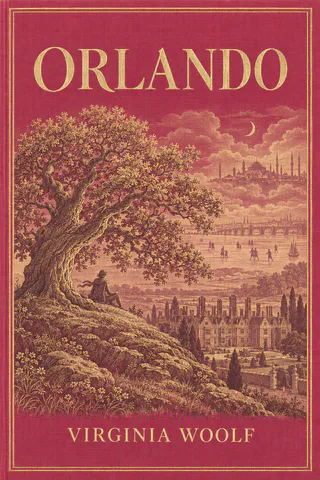
Orlando
Virginia Woolf
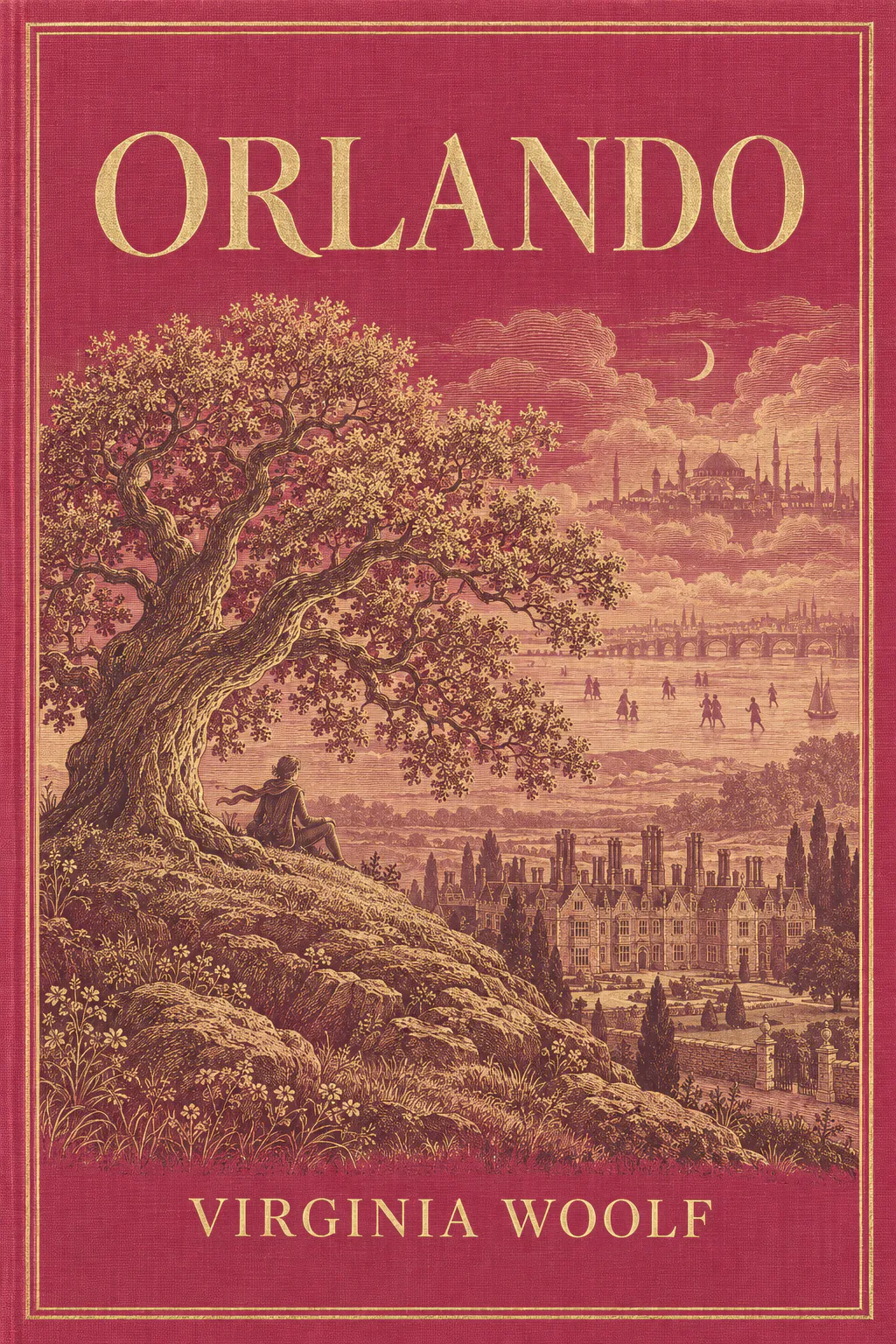
Orlando
Also in Romanian
3.87from 123,253 ratingson Goodreads
Orlando is a young nobleman at the court of Elizabeth I who wants to be a poet. He lives for more than three hundred years, wakes one morning in Constantinople a woman, and goes on writing into the twentieth century. Woolf's playful mock-biography, written for Vita Sackville-West (1928).
Contains spoilers for the entire book
- Themes
- Atmosphere
About the book
Published in 1928 with the subtitle A Biography, Orlando follows a young nobleman at the court of Elizabeth I who longs to be a poet. He lives on for more than three hundred years, through the frost fair of the Great Frost, an embassy to Constantinople and the fashions of the Restoration and the Victorian age, and partway through wakes to find he has become a woman. Virginia Woolf wrote the book as a playful tribute to her friend and lover Vita Sackville-West, whose family history and great house at Knole lie behind it, and illustrated it with photographs presented as portraits of its hero. A mock biography that is also a history of English literature and manners, it treats gender, time and identity with unusual freedom and wit.
Characters
Orlando — Protagonist
A young Elizabethan nobleman whose extraordinary life spans centuries and includes a change of sex.
Sasha — Russian princess
An elusive visitor whose romance with Orlando unfolds during the Great Frost.
Nicholas Greene — Writer
A literary figure whose changing tastes and judgments trouble Orlando's ambitions as a poet.
Archduchess Harriet / Archduke Harry — Persistent suitor
An aristocratic admirer whose shifting presentation complicates Orlando's encounters with courtship.
Marmaduke Bonthrop Shelmerdine — Adventurer
A seafaring traveler whose meeting with Orlando opens an unconventional relationship.
Queen Elizabeth I — Monarch
The aging queen whose favor introduces the young Orlando to courtly life.
About the author
Virginia Woolf (1882–1941) was an English novelist and essayist, and one of the central figures of literary modernism. She wrote novels that follow consciousness rather than plot — a day in a city, a decade passing in an empty house — and found a form for the way attention actually moves. With her husband Leonard she ran the Hogarth Press, which published her own books along with T. S. Eliot and the first English translations of Freud. Her work includes Mrs Dalloway, To the Lighthouse, Orlando, The Waves and the essay A Room of One's Own.