
Răscoala
Liviu Rebreanu
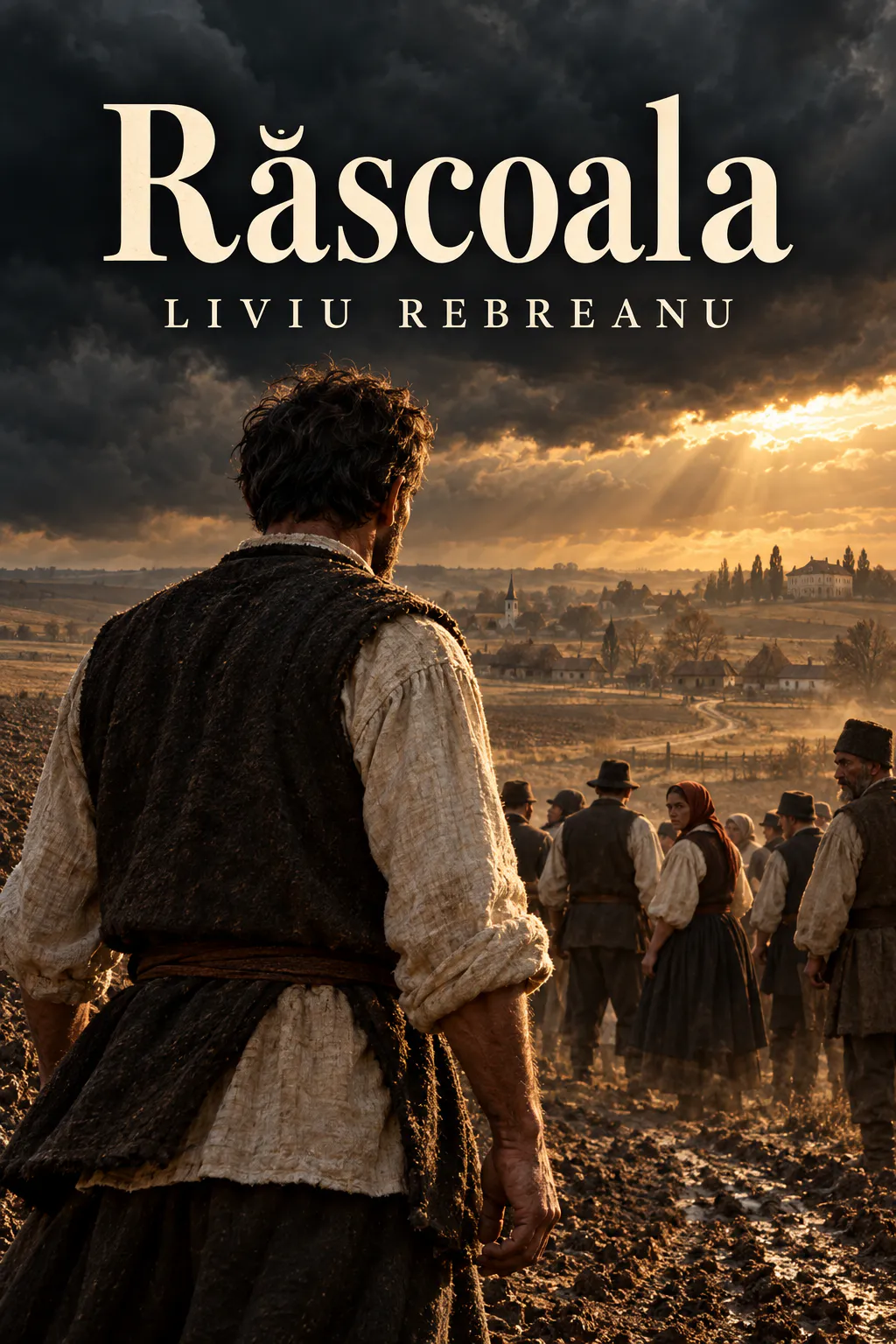
Răscoala
FictionClassicsHistorical Fiction
3.97from 2,203 ratingson Goodreads
In the spring of 1907, as Bucharest society dines and gossips, the villages of the Danube plain are starving on land that belongs to others. Rebreanu follows young landowner Grigore Iuga, the journalist Titu Herdelea and the peasants of Amara, led by the returning soldier Petre Petre, as rumour, hunger and hope turn into a revolt that sweeps the country — and into its bloody suppression.
Unavailable in your country or region due to copyright
Available here from January 1, 2028
Contains spoilers for the entire book
- Themes
- Atmosphere
About the book
Published in 1932, Răscoala (The Uprising) is Liviu Rebreanu's novel of the great Romanian peasants' revolt of 1907, in which tens of thousands rose against the landowners and leaseholders and the army put the rising down with artillery. It appeared in two volumes, Se mișcă țara! (The Country Stirs) and Focurile (The Fires). Rebreanu, who had already written the peasant's hunger for land in Ion, here makes the crowd itself the protagonist. The story moves between the salons of Bucharest and the villages around the Iuga estate, between liberal landowners, cynical politicians and peasants whose patience runs out, and it builds with the slow inevitability of a storm. Critics have counted it among the greatest Romanian novels. This edition is the original Romanian text.
Characters
Titu Herdelea — The young poet
A Transylvanian poet newly arrived in Bucharest, hoping for help from the deputy Gogu Ionescu, who witnesses the year’s events.
Grigore Iuga — The young landowner
The son of Miron Iuga of the Amara estate, educated in Berlin, who wants to treat his peasants fairly.
Miron Iuga — The old landowner
Grigore’s father, a stern, old-fashioned master of Amara who runs his estate as he always has.
Nadina — Grigore’s wife
A capricious beauty who prefers Bucharest to the country, sister of Gogu Ionescu and owner of estates let to a leaseholder.
Gogu Ionescu — The deputy
Nadina’s brother, a member of Parliament who has promised to help Titu find work.
Platamonu — The leaseholder
The Greek tenant who leases the estates of Nadina and her brother, and whose dealings with the peasants are watched with resentment.
Petre Petre — The soldier
A corporal from the Iuga estates at Amara, serving in the army when Titu first meets him.
Baloleanu — The lawyer
A worldly Bucharest lawyer and friend of Grigore, a few years older and full of political opinions.
About the author
Liviu Rebreanu (1885–1944) was a Romanian novelist and playwright, widely regarded as a founding figure of the modern Romanian novel. Known for his realism and psychological depth, he explored rural life, social inequality, and the conflicts between personal desire and moral responsibility. His most celebrated novels, Ion and Forest of the Hanged, remain essential works of Romanian literature.