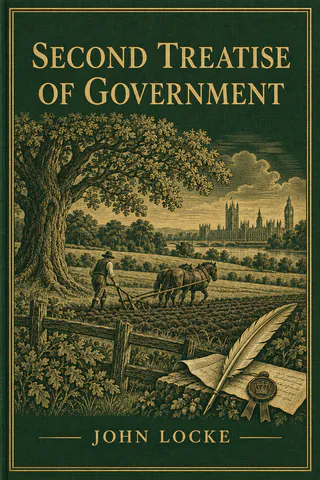
Second Treatise of Government
John Locke
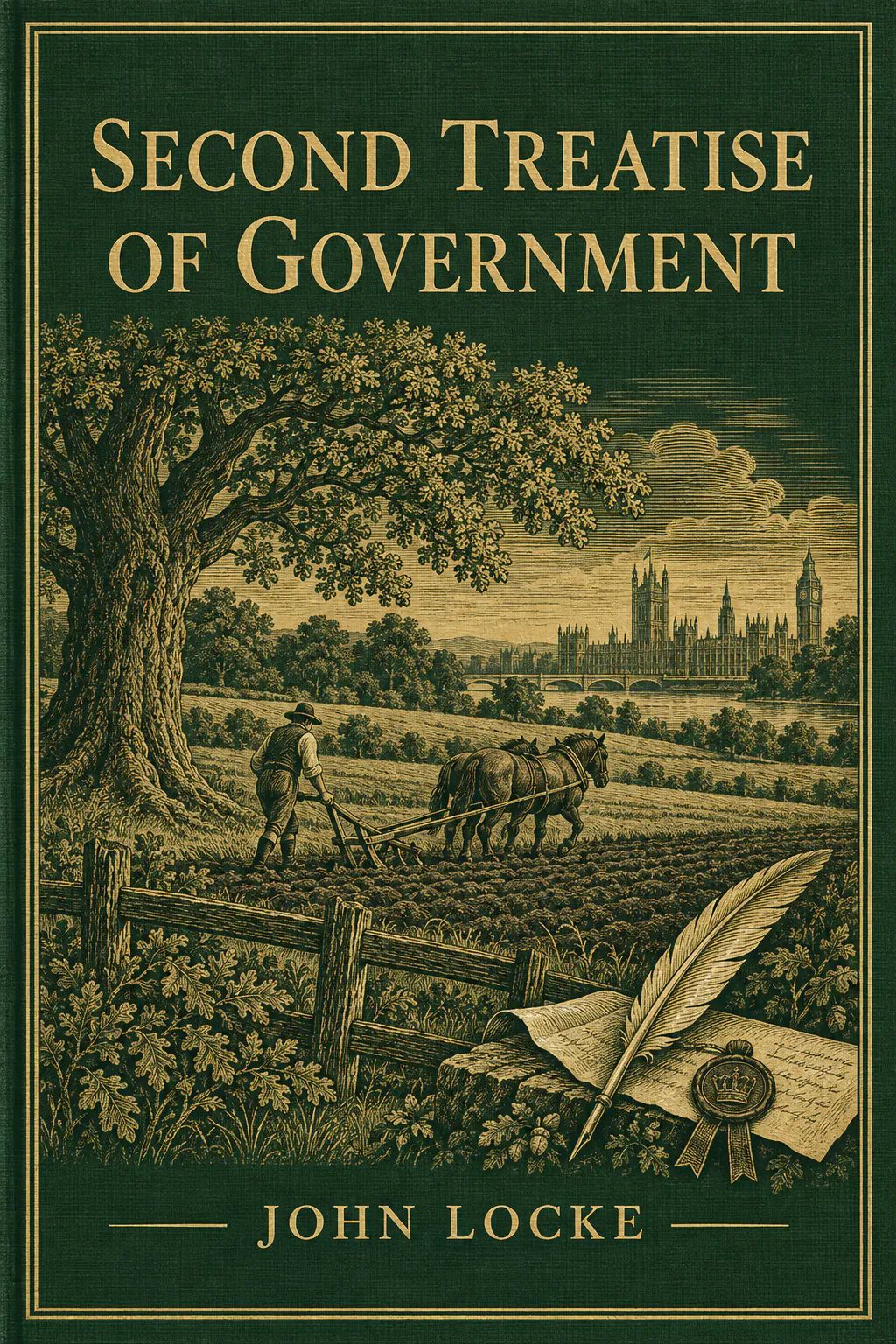
Second Treatise of Government
ClassicsNonfictionPhilosophyPolitics & Society
3.78from 24,703 ratingson Goodreads
"Second Treatise of Government" by John Locke is a political philosophy work published in 1689. Writing anonymously during England's turbulent revolution, Locke outlines a radical vision of society founded on natural rights and government by consent rather than divine authority. His ideas challenge the established order, arguing that legitimate power flows from the people, not kings claiming God-given rule. This foundational text of liberal political theory emerged from dangerous conspiracies and exile, so controversial that Locke never acknowledged authorship during his lifetime.
Contains spoilers for the entire book
- Themes
- Atmosphere
About the book
Published anonymously in 1689, the Second Treatise of Government is John Locke’s account of the origin, purpose and limits of political power. He begins with a state of nature in which people are free and equal, governed by a law of nature that forbids them to harm one another’s life, health, liberty or possessions. Locke argues that property arises when people mix their labour with the land, that legitimate government rests on the consent of the governed and exists to protect their rights, and that a people may resist and replace rulers who betray that trust. Written in the years of the Glorious Revolution, the treatise became a cornerstone of liberal thought and influenced the founders of the American republic.
Characters
Adam — The first man
Whose supposed dominion over the world Locke denies is the origin of kingly power, and whose grant of the earth to mankind begins his account of property.
The judicious Hooker — The authority quoted
Richard Hooker, the Elizabethan theologian whose Laws of Ecclesiastical Polity Locke quotes in support of his arguments.
The Indians of America — The state of nature
Locke’s example of peoples living without settled government, since “in the beginning all the world was America”.
The tyrant — The ruler who forfeits power
A ruler who exercises power beyond right, for his own advantage, and whom the people may lawfully resist.
Sir Robert Filmer — The opponent
The defender of the divine right of kings whose arguments the first of Locke’s two treatises had refuted.
About the author
John Locke (1632–1704) was an English philosopher and physician, born in Wrington, Somerset, and educated at Westminster School and Christ Church, Oxford. He became physician, secretary and adviser to Lord Ashley, later Earl of Shaftesbury, a leading opponent of the king, and when Shaftesbury fell from power Locke went into exile in the Netherlands in 1683. He returned to England after the Glorious Revolution of 1688, and within a short time published his major works: An Essay Concerning Human Understanding, which argued that the mind begins as a blank slate and gains its ideas from experience, the Two Treatises of Government and A Letter Concerning Toleration. His later writings include Some Thoughts Concerning Education (1693). Locke spent his last years at Oates in Essex, where he died in 1704. His ideas on knowledge, natural rights and government by consent made him one of the founders of modern liberal thought.