
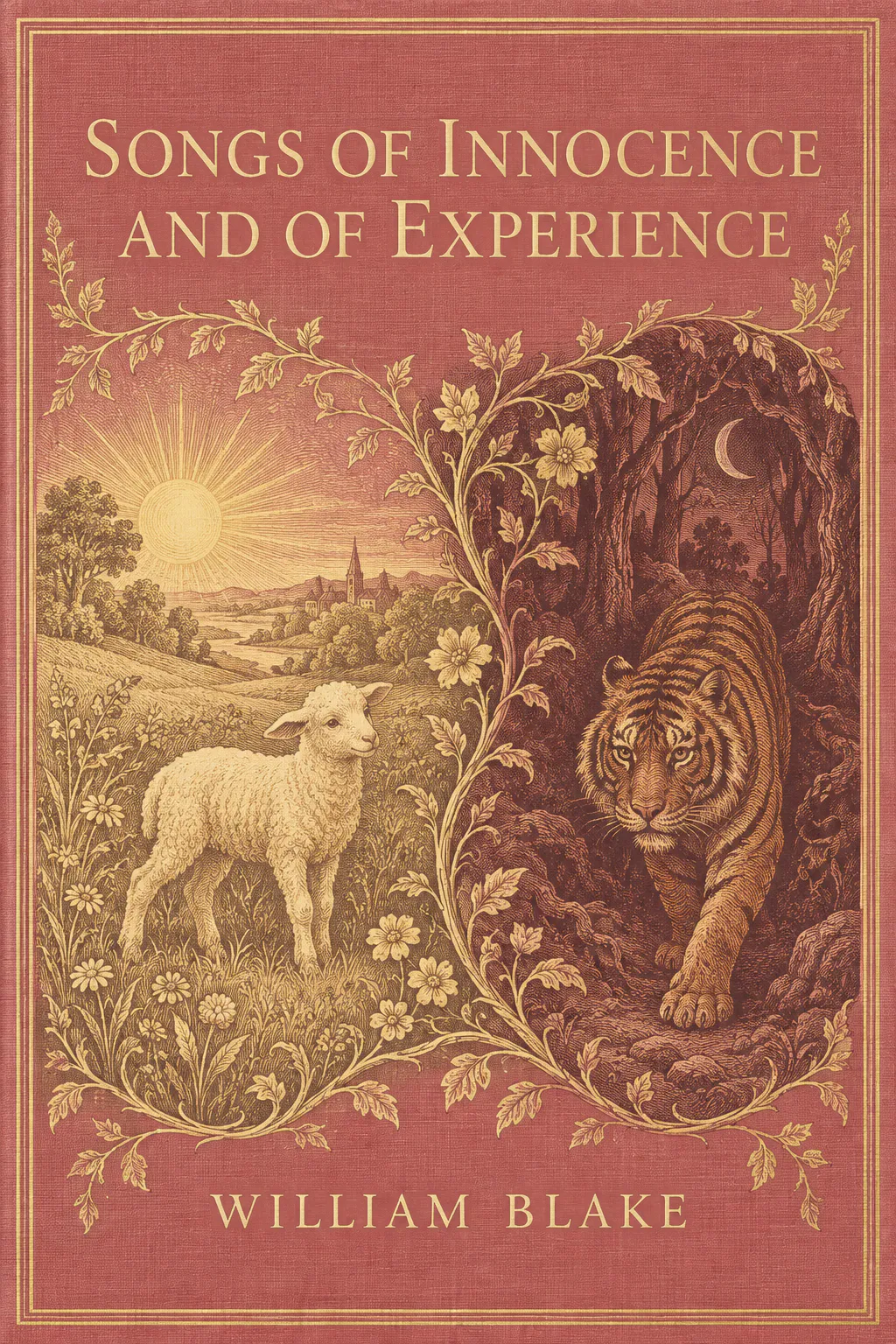
Songs of Innocence and of Experience
William Blake
Contains spoilers for the entire book.
Discussion topics
Topic 01 of 08
Songs that change as we listen
How did the sound of these poems affect your response to what they describe?
Keep the conversation going
- Where did a simple rhythm or repeated phrase make an unsettling subject more striking?
- How different was your experience of a playful poem such as “Laughing Song” and a darker one such as “A Poison Tree”?
There is no single right answer. Bring your own reading.
Discussion topics
How did the sound of these poems affect your response to what they describe?
Keep the conversation going
- Where did a simple rhythm or repeated phrase make an unsettling subject more striking?
- How different was your experience of a playful poem such as “Laughing Song” and a darker one such as “A Poison Tree”?
What do the two versions of “Nurse’s Song” suggest about how adults respond to children’s freedom?
Keep the conversation going
- How does each nurse’s own state of mind shape the world the children are allowed to inhabit?
- What do “The Schoolboy” and the contrast between “Infant Joy” and “Infant Sorrow” add to this picture of childhood?
How does reading both versions of “The Chimney-Sweeper” change your understanding of the comfort offered to the children?
Keep the conversation going
- What possibilities do you hear in the first poem’s closing reassurance about doing one’s duty?
- How do the two “Holy Thursday” poems affect your view of the adults who claim to care for poor children?
How does the encounter with “The Tiger” change the questions raised by “The Lamb”?
Keep the conversation going
- What difference does it make that the child in “The Lamb” supplies an answer while “The Tiger” keeps asking questions?
- How do tenderness, beauty, and fear coexist in your reading of these two creatures?
How do the opposing voices in “The Clod and the Pebble” help you read love elsewhere in the collection?
Keep the conversation going
- What different possibilities for love appear in “The Sick Rose” and “My Pretty Rose Tree”?
- How does the speaker’s satisfaction at the end of “A Poison Tree” complicate a straightforward lesson about anger?
How do “The Divine Image” and “The Human Abstract” invite different ways of thinking about mercy and pity?
Keep the conversation going
- What changes when pity is linked to the poverty that makes it necessary?
- How does the hope of being loved in “The Little Black Boy” sit beside the welcome offered to every human form in “The Divine Image”?
What kinds of restriction connect “The Garden of Love,” “London,” and “Earth’s Answer”?
Keep the conversation going
- How do gardens, streets, and the natural world help make those restrictions felt?
- Where do the poems leave room for people to imagine or create a different way of living?
How does ending with “The Voice of the Ancient Bard” affect your understanding of the collection’s movement from innocence to experience?
Keep the conversation going
- What mixture of invitation and warning do you hear in the final poem?
- How does its concern about who should lead others change your view of the voices that have guided you through the book?
There is no single right answer. Bring your own reading.