
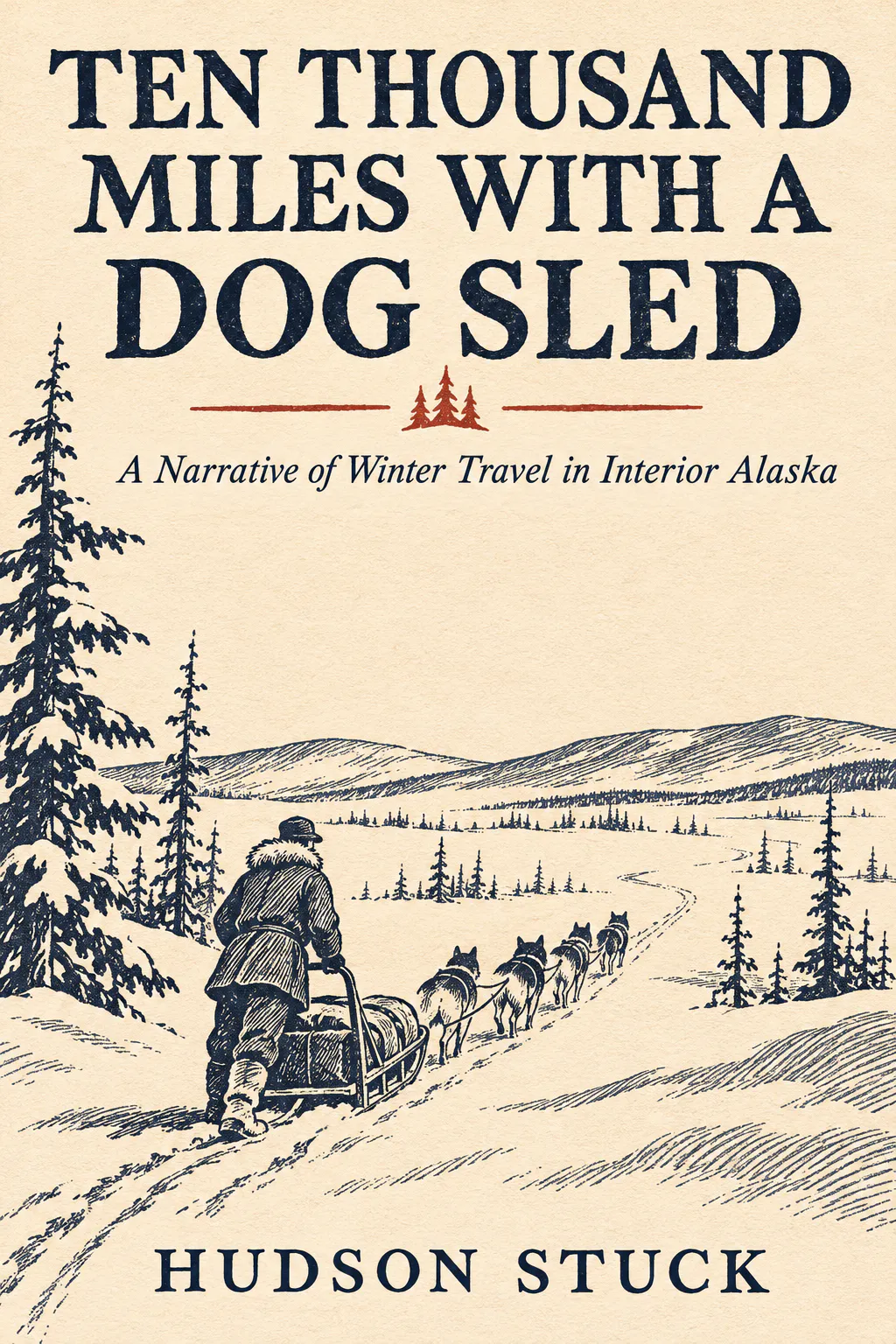
Ten Thousand Miles with a Dog Sled: A Narrative of Winter Travel in Interior Alaska
Hudson Stuck
Book Club
Ten Thousand Miles with a Dog Sled: A Narrative of Winter Travel in Interior Alaska
8 ways to start a deeper conversation.
Contains spoilers for the entire book.
Discussion topics
Topic 01 of 08
A plea in the front of it
Stuck ends his Preface with a plea for the natives of interior Alaska, “that they be not wantonly destroyed off the face of the earth.” How does that plea shape the book that follows?
Keep the conversation going
- Where in the journeys did you feel his concern for the native people most strongly?
- How does a missionary’s advocacy written in 1914 read to you today?
There is no single right answer. Bring your own reading.
Discussion topics
Stuck ends his Preface with a plea for the natives of interior Alaska, “that they be not wantonly destroyed off the face of the earth.” How does that plea shape the book that follows?
Keep the conversation going
- Where in the journeys did you feel his concern for the native people most strongly?
- How does a missionary’s advocacy written in 1914 read to you today?
Overflow water, the wind in the Chandalar Gap, cold that freezes a man’s breath: which hardship of the trail made the strongest impression on you?
Keep the conversation going
- Why do you think Stuck describes danger so plainly, with so little drama?
- What did you learn about how people managed to travel and survive in such cold?
At Moses’ Village Stuck buries a man found frozen on the trail, whose notebook ends “All aboard to-morrow, hope to God I get there.” What does this episode tell you about the country and the people the gold drew to it?
Keep the conversation going
- How do Stuck’s roles as priest and notary public meet in this scene?
- Why do you think he mentions that scarce a winter passes without such lonely graves?
Nanook, Jimmy, Kewalik and the rest are almost characters in their own right. How does Stuck write about his dogs?
Keep the conversation going
- Did anything in his chapter on the Alaskan dogs, and on how they are driven and treated, surprise you?
- What does the book’s closing tribute to the dog say about the life of the trail?
From the abandoned Koyukuk “towns” of ’98 to Nome and the new camp at Iditarod, the gold rush is everywhere in the book. What is Stuck’s view of it?
Keep the conversation going
- How does he contrast the mining camps with the native villages and the missions?
- What did his footnote on the saloon licence and the sale of liquor to the Indians reveal to you?
Stuck travels as a churchman, but he also writes about schools, hospitals, the law and the government of the territory. How does he see the mission’s place in Alaska?
Keep the conversation going
- What do you make of his warnings, in the chapter on the natives, that the Indian race of the interior is threatened with extinction?
- Where do his views seem to you most of his time, and where ahead of it?
The book ends with chapters on photography in the Arctic and on the northern lights rather than with a last journey. Why do you think Stuck includes them?
Keep the conversation going
- How did the photographs in this edition change the way you read the journeys?
- Which of his descriptions of the aurora has stayed with you?
Stuck takes issue with the view “outside” of Alaska as a world’s treasure-house with millions of acres waiting for the plough. How does his picture of the country differ?
Keep the conversation going
- Why do you think he insists that nine tenths of it will probably always remain wilderness?
- What do you think he would make of Alaska today?
There is no single right answer. Bring your own reading.