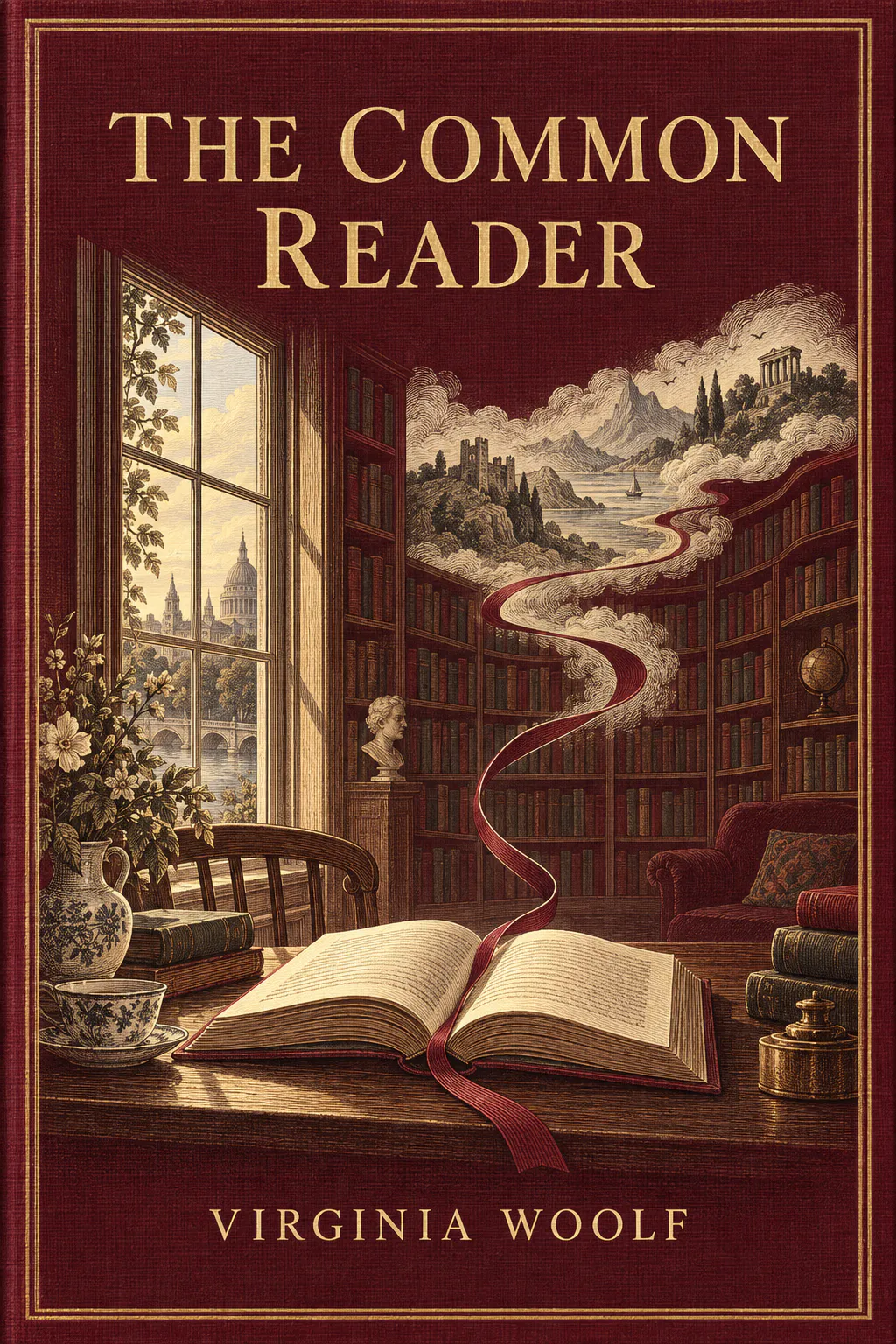
The Common Reader
Virginia Woolf
Contains spoilers for the entire book.
Discussion topics
Topic 01 of 08
The common reader
What does Woolf, borrowing Johnson's phrase, mean by the common reader, and how does that reader differ from the critic or the scholar?
Keep the conversation going
- Do you recognise yourself in her description?
- What does reading for pleasure give that reading for study does not?
There is no single right answer. Bring your own reading.
Discussion topics
What does Woolf, borrowing Johnson's phrase, mean by the common reader, and how does that reader differ from the critic or the scholar?
Keep the conversation going
- Do you recognise yourself in her description?
- What does reading for pleasure give that reading for study does not?
Why does Woolf call Wells, Bennett and Galsworthy materialists, and what does she think they leave out?
Keep the conversation going
- What did you make of her famous line that life is a luminous halo rather than a series of gig lamps symmetrically arranged?
- Has the kind of fiction she was arguing for become the norm?
How can we read Greek literature at all, Woolf asks, when we do not know how it sounded or even where the laughter came?
Keep the conversation going
- What does she think Greek plays give us that later writers cannot?
- What is lost, and what remains, when we read any book in translation?
What does Woolf admire most in Jane Austen, and what does she guess Austen might have written had she lived longer?
Keep the conversation going
- Which of Austen's gifts does Woolf think readers most often miss?
- Why do you think Woolf looks so closely at the unfinished Watsons to find out how Austen worked?
How does Woolf compare Charlotte and Emily Brontë, and why does she rate Wuthering Heights as the harder book?
Keep the conversation going
- What do you make of her claim that Middlemarch is one of the few English novels written for grown-up people?
- What does she think these women had to overcome to write at all?
What does Woolf think English readers learn from the Russian novelists, from Chekhov's inconclusive endings to Dostoevsky's souls?
Keep the conversation going
- How does she suggest translation shapes our sense of them?
- Which Russian book, if you have read one, matches her description?
Why does Woolf turn so often to forgotten people, the Pastons, Laetitia Pilkington, Miss Ormerod, rather than only to the famous?
Keep the conversation going
- Which of these obscure lives did you find most alive on the page?
- What do such lives show that great books cannot?
Why does Woolf think it is so hard to judge the books of one's own time?
Keep the conversation going
- Which recent books would you trust yourself to call masterpieces, and why?
- What do her essays as a whole suggest a reader owes to the books they read?
There is no single right answer. Bring your own reading.