
The Confessions of St. Augustine
Augustine, of Hippo, Saint
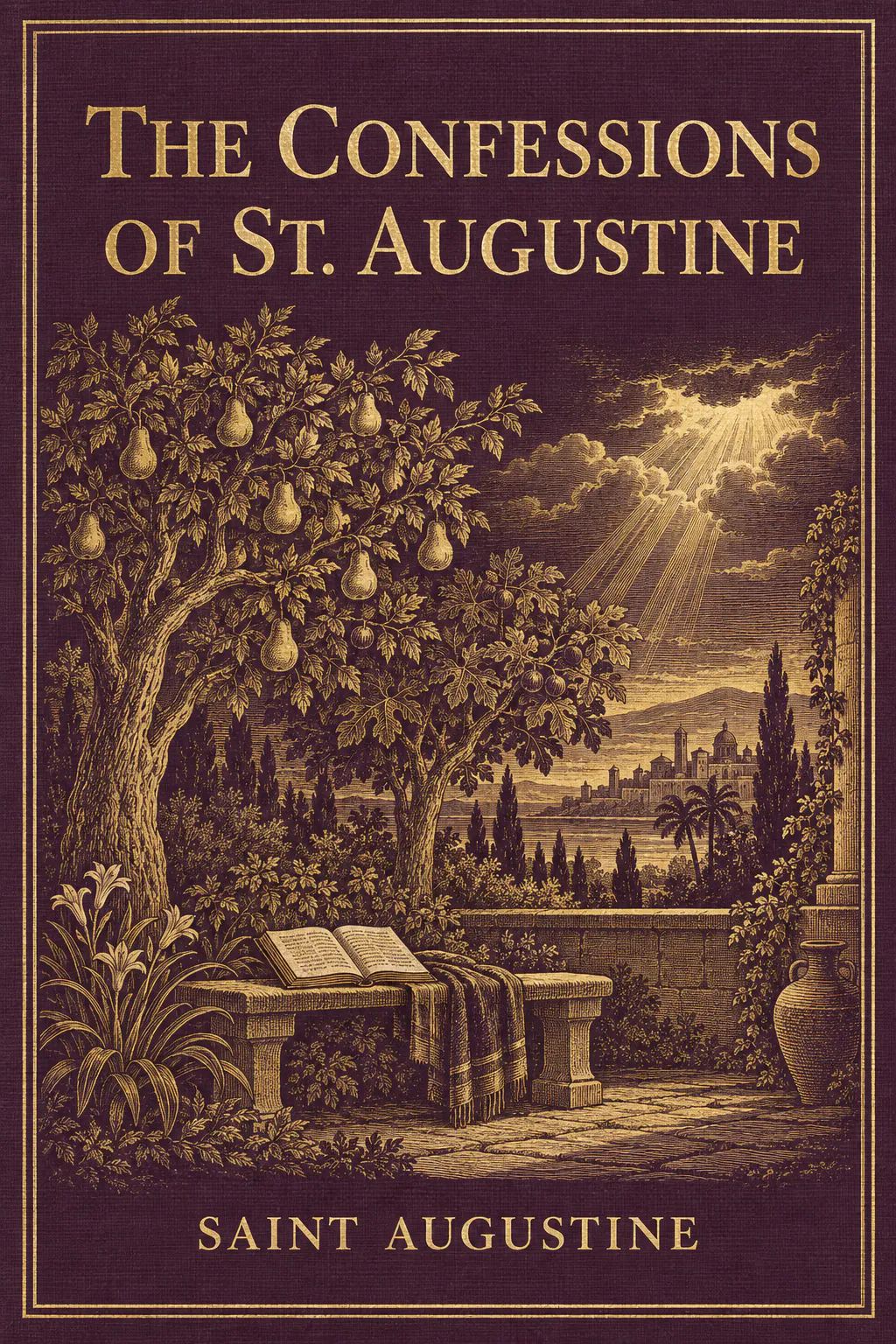
Book Club
The Confessions of St. Augustine
8 ways to start a deeper conversation.
Contains spoilers for the entire book.
Discussion topics
Topic 01 of 08
A book of prayer
How does it change the book that Augustine addresses it to God rather than to his readers?
Keep the conversation going
- Why does he open by saying our heart is restless until it rests in God?
- Did you read the Confessions as autobiography, prayer or philosophy?
There is no single right answer. Bring your own reading.
Discussion topics
How does it change the book that Augustine addresses it to God rather than to his readers?
Keep the conversation going
- Why does he open by saying our heart is restless until it rests in God?
- Did you read the Confessions as autobiography, prayer or philosophy?
Why does Augustine spend so long on a boyhood theft of pears he did not even want?
Keep the conversation going
- What does he conclude about why he did it?
- Do you think he makes too much of it, or too little?
What part does his mother Monica play in Augustine's life and in the book?
Keep the conversation going
- How did you respond to her tears for him, and to the bishop's promise that a son of so many tears could not be lost?
- What did you make of their shared vision at Ostia shortly before her death?
Why was Augustine drawn to the Manichees for nine years, and what finally turned him away?
Keep the conversation going
- What did his meeting with Faustus show him?
- How does his struggle with the problem of evil shape the rest of the book?
What did you make of Augustine's prayer, "Give me chastity and continency, only not yet"?
Keep the conversation going
- How did you respond to his parting from the mother of his son?
- How honest do you find his account of his own desires?
How did you respond to the scene in the Milan garden, with the child's voice saying "take up and read"?
Keep the conversation going
- What part do the stories of other converts, like Victorinus and Antony, play in his own turn?
- Is his conversion sudden or the end of a long process?
Why does Augustine turn, in Book Ten, from his past to the nature of memory itself?
Keep the conversation going
- What does he find in the vast palace of memory?
- Why does the search for God lead him there?
How did you respond to Augustine's famous puzzle about time: if no one asks me, I know; if I want to explain it, I do not?
Keep the conversation going
- What is his answer, that time is a stretching of the mind?
- Why do you think the book ends with time and the creation in Genesis rather than with his own story?
There is no single right answer. Bring your own reading.