
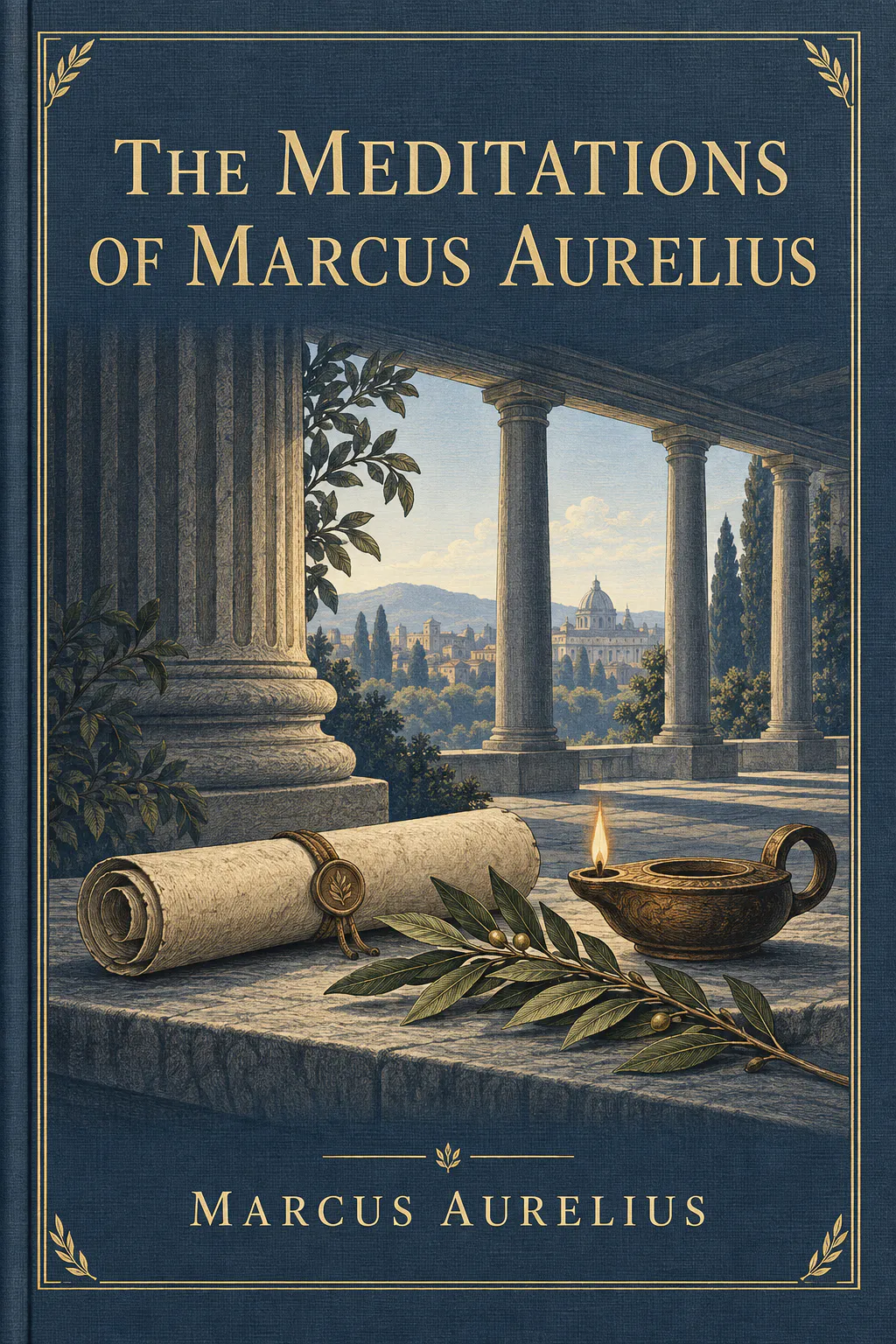
The Meditations of the Emperor Marcus Aurelius Antoninus: A new rendering based on the Foulis translation of 1742
Marcus Aurelius
Book Club
The Meditations of the Emperor Marcus Aurelius Antoninus: A new rendering based on the Foulis translation of 1742
8 ways to start a deeper conversation.
Contains spoilers for the entire book.
Discussion topics
Topic 01 of 08
Notes to himself
How does it change your reading to know the Meditations were private notes, never meant for anyone but Marcus himself?
Keep the conversation going
- Which passages felt most like a man talking himself into something he found hard?
- Why do you think so many readers since have found these notes useful for their own lives?
There is no single right answer. Bring your own reading.
Discussion topics
How does it change your reading to know the Meditations were private notes, never meant for anyone but Marcus himself?
Keep the conversation going
- Which passages felt most like a man talking himself into something he found hard?
- Why do you think so many readers since have found these notes useful for their own lives?
What does the opening list of debts to family, teachers and friends tell you about the kind of man Marcus wanted to be?
Keep the conversation going
- Which of the qualities he thanks people for would you most like to have?
- Why might he begin with gratitude rather than with argument?
How convincing do you find his insistence that only our own judgements and actions are in our power?
Keep the conversation going
- Where does that idea help, and where does it risk making us indifferent to real harm?
- How might you apply it to something troubling you now?
What did you make of Marcus arguing with himself about getting out of bed to do the work of a human being?
Keep the conversation going
- Why does a man with so much power need to remind himself to do his duty?
- What do these small moments add to the book's larger ideas?
How does Marcus prepare himself to meet people who are meddling, ungrateful or unkind?
Keep the conversation going
- Is his advice to treat wrongdoers as people who simply do not know better generous or condescending?
- Which of his strategies for dealing with others would you actually use?
Why does Marcus return so often to death, to the short span of life and to the famous names already forgotten?
Keep the conversation going
- Does that thought console you, or make things feel pointless?
- How does he try to turn the shortness of life into a reason to live well?
How do you square the calm philosophy of the Meditations with the fact that Marcus ruled an empire and led armies?
Keep the conversation going
- Where do you see the pressures of his position showing through?
- Can a person in great power really live by these principles?
Why do you think Marcus repeats himself so often, and what does that suggest about how philosophy was meant to be used?
Keep the conversation going
- Which idea in the book did you find yourself coming back to?
- Is Stoicism a philosophy you could live by, and what would it cost you?
There is no single right answer. Bring your own reading.