
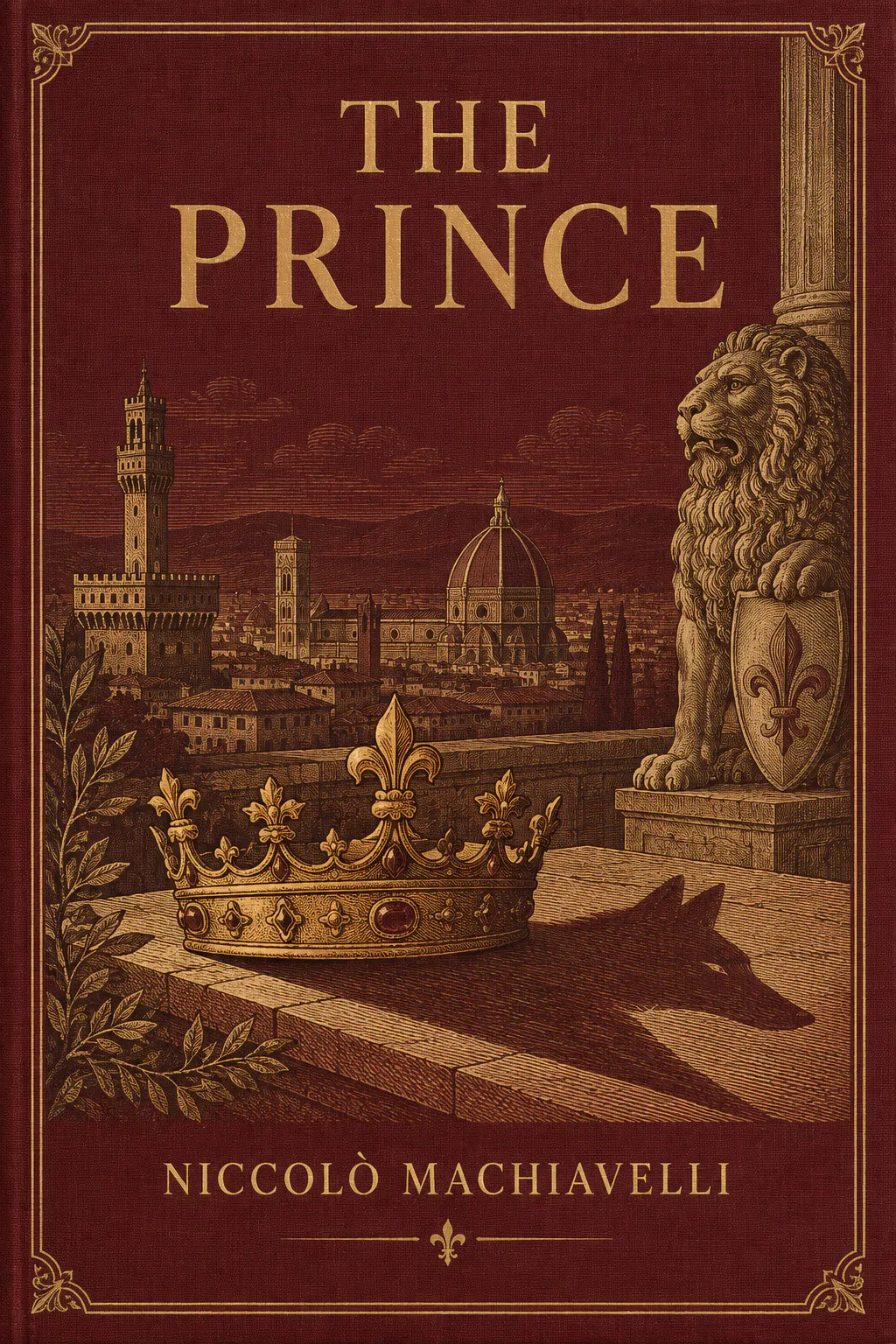
The Prince
Niccolò Machiavelli
Contains spoilers for the entire book.
Discussion topics
Topic 01 of 08
Advice for a new ruler
Why does Machiavelli write about new princes rather than hereditary ones, and what makes their position so dangerous?
Keep the conversation going
- What does his dedication to Lorenzo de' Medici suggest about why he wrote the book?
- Did you read the book as practical advice, satire or something else?
There is no single right answer. Bring your own reading.
Discussion topics
Why does Machiavelli write about new princes rather than hereditary ones, and what makes their position so dangerous?
Keep the conversation going
- What does his dedication to Lorenzo de' Medici suggest about why he wrote the book?
- Did you read the book as practical advice, satire or something else?
How did you respond to Machiavelli's argument that, if a prince cannot be both, it is safer to be feared than loved?
Keep the conversation going
- Why does he insist the prince must never be hated?
- Where have you seen leaders follow this rule, for good or ill?
Why does Machiavelli hold up Cesare Borgia as a model, despite his ultimate failure?
Keep the conversation going
- What did you make of the story of Remirro de Orco, used to pacify the Romagna and then cut in two in the piazza?
- Is admiring Borgia's methods the same as approving of them?
What does Machiavelli mean when he says a prince must seem merciful, faithful, humane and religious, but be ready to act otherwise?
Keep the conversation going
- Is there any difference, in politics, between seeming good and being good?
- Do modern leaders face the same choice?
How does the image of the prince as both fox and lion sum up Machiavelli's view of power?
Keep the conversation going
- Which of the two does he seem to value more?
- What does he think a prince should do about promises?
Why does Machiavelli argue so fiercely against mercenaries and for a prince's own soldiers?
Keep the conversation going
- What did that argument mean for the Italy of his day?
- What does his attention to armies tell you about where he thinks power really lies?
What does Machiavelli mean by fortune, and how much of a ruler's success does he think it controls?
Keep the conversation going
- How did you respond to his image of fortune as a river that must be held back by dykes?
- Do you agree that boldness does better against fortune than caution?
How does the final call to free Italy from the barbarians change your reading of everything before it?
Keep the conversation going
- Is Machiavelli a cynic, a patriot or both?
- Why has "Machiavellian" become an insult, and is that fair to the book?
There is no single right answer. Bring your own reading.