
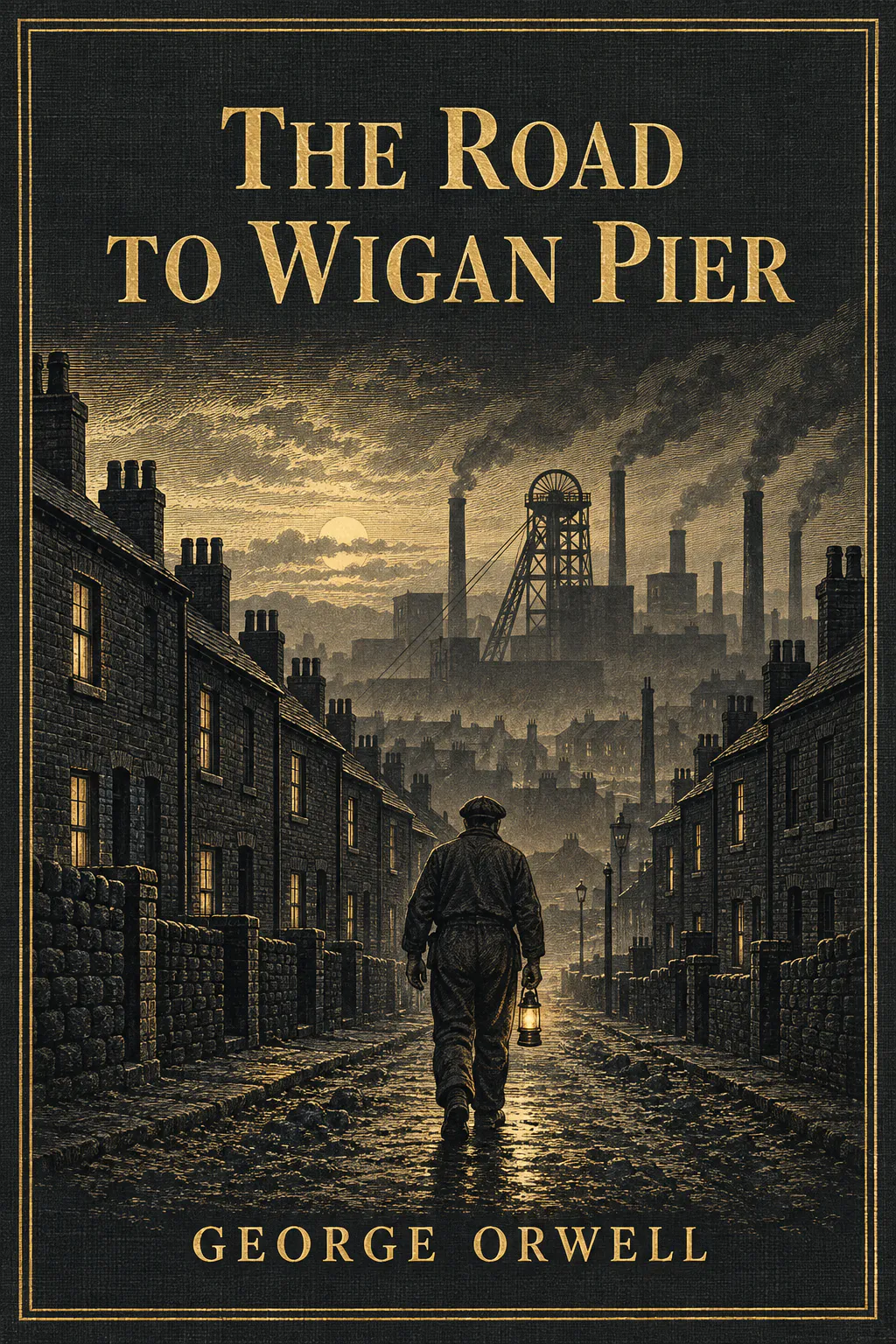
The Road to Wigan Pier
George Orwell
Contains spoilers for the entire book.
Discussion topics
Topic 01 of 08
The Brookers' lodging house
Why do you think Orwell opens the book with the tripe shop and its lodgers rather than with the mines?
Keep the conversation going
- What does his disgust at the Brookers tell you about Orwell himself as much as about them?
- Did his description feel fair to you, or more like an outsider's revulsion?
There is no single right answer. Bring your own reading.
Discussion topics
Why do you think Orwell opens the book with the tripe shop and its lodgers rather than with the mines?
Keep the conversation going
- What does his disgust at the Brookers tell you about Orwell himself as much as about them?
- Did his description feel fair to you, or more like an outsider's revulsion?
How does Orwell make the work underground real to a reader who will never see it?
Keep the conversation going
- What did you make of his claim that the comfortable life above ground depends on men like these?
- Which detail of the journey to the coal face stayed with you most?
What does the book show about how unemployment and the Means Test changed families, and not only their incomes?
Keep the conversation going
- Why does Orwell take such care to set out household budgets in figures?
- What does he think cheap luxuries like the cinema and fish and chips do for people with nothing else?
What do Orwell's descriptions of housing in Wigan and Sheffield suggest about who was responsible for these conditions?
Keep the conversation going
- How did you respond to the image of the young woman kneeling to clear a blocked drain, seen from a train?
- What does he make of the new council estates that were meant to replace the slums?
How did you respond when the second half of the book turns from reporting on the North to Orwell's own life and class?
Keep the conversation going
- Why does he feel he has to explain his own upbringing before he can argue about socialism?
- What does his account of Burma and of tramping add to his argument?
What does Orwell mean when he says the real secret of class distinctions in the West was summed up in the words "the lower classes smell"?
Keep the conversation going
- How honest do you find his account of his own snobbery?
- Can a person unlearn the class they were raised in, as he hopes?
Why does Orwell think so many socialists drive away the very people socialism is meant to help?
Keep the conversation going
- Were his jibes at cranks, faddists and middle-class intellectuals fair, or did they get in the way of his point?
- What does he think socialism should be about instead?
What do you make of Orwell's worry that a socialist world of machines and comfort might also be a softer, emptier one?
Keep the conversation going
- Is his suspicion of progress at odds with the misery he described in the first half?
- How does the book's argument hold up for readers today?
There is no single right answer. Bring your own reading.