
Viața la țară
Duiliu Zamfirescu
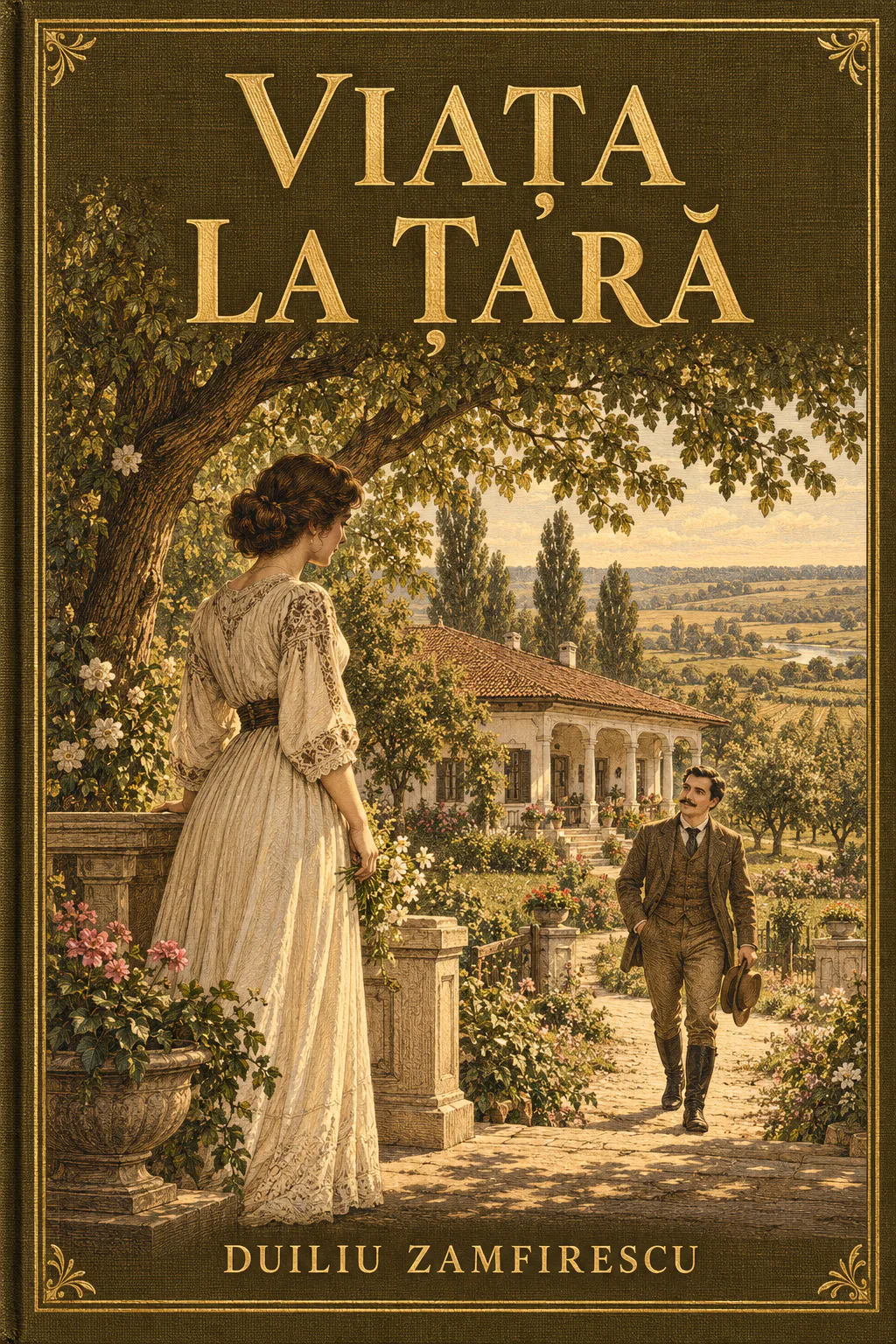
Viața la țară
After years away, Matei Damian comes home to run his family's estate in the Ialomița plain, among the boyar households, peasants and tenant farmers of the Wallachian countryside. There he grows close to Sașa Comăneșteanu, the young daughter of a neighbouring family — a quiet love story set against harvests, village feasts and the rise of a new, grasping class of estate managers.
About the book
Viața la țară (Life in the Country) was serialised in Convorbiri literare in 1894–1895 and published as a book in 1898. It is the first of Duiliu Zamfirescu's five novels about the Comăneșteanu family, followed by Tănase Scatiu, În război, Îndreptări and Anna. The novel follows Matei Damian, a landowner returning to his estate after a long absence, and his slowly deepening attachment to Sașa Comăneșteanu. Around them Zamfirescu draws the life of the old boyar families of the Wallachian plain — their households, neighbours and peasants — and the arrival of men like the tenant farmer Tănase Scatiu, whose money and ambition threaten their world. Calm, observant and affectionate towards the countryside, it is one of the classic Romanian novels of rural life. This edition is the original Romanian text.
Characters
Matei Damian — Protagonist
A landowner returning to his family estate after years away, who slowly falls in love with Sașa.
Sașa Comăneșteanu — The girl he loves
The young daughter of a neighbouring boyar family, thoughtful and reserved.
Tănase Scatiu — Tenant farmer
A grasping, upstart estate tenant whose money and ambition threaten the old boyar world.
Tincuța Comăneșteanu — Sașa's sister
Sașa's sister, whose fate becomes bound up with Tănase Scatiu.
About the author
Duiliu Zamfirescu (1858–1922) was a Romanian novelist, poet and diplomat, born in Plainești in Moldavia. After studying law in Bucharest he worked as a magistrate and journalist before entering the diplomatic service, which kept him in Rome and other European capitals for much of his life; in 1920 he briefly served as Romania's foreign minister. Associated with the Junimea literary society, he is best known for his cycle of novels about the Comăneșteanu family, beginning with Viața la țară and Tănase Scatiu, which portray the Romanian landed gentry at the turn of the twentieth century.