
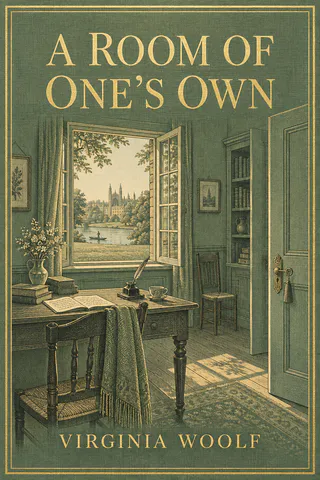
A Room of One's Own
Virginia Woolf
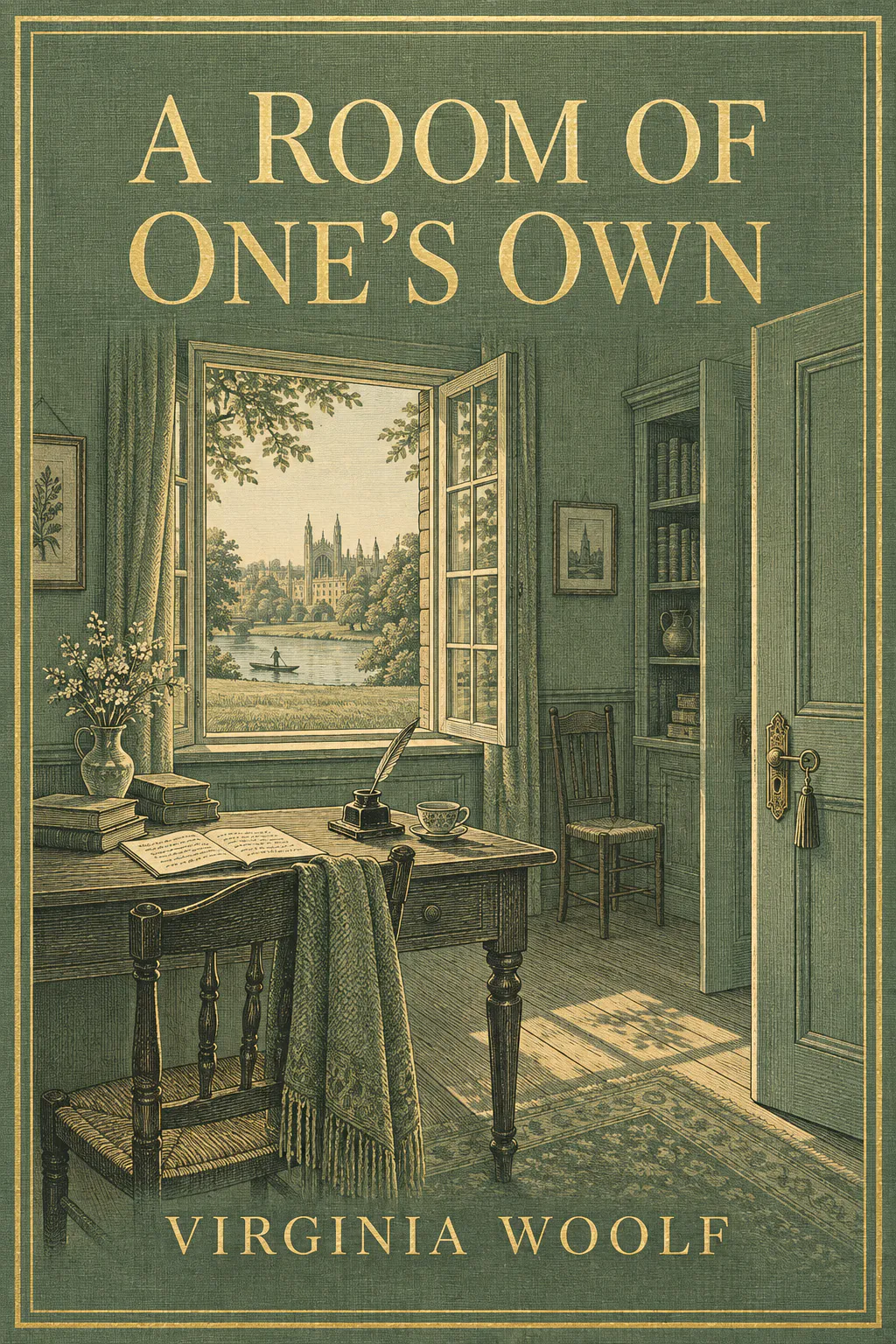
A Room of One's Own
FictionNonfictionPolitics & SocietyEssaysLiterary Criticism
6 chapters·4h 3m listening·Also in Romanian
4.22from 282,655 ratingson Goodreads
Asked to speak about women and fiction, Woolf walks through an Oxbridge college, a London library and an imagined life for Shakespeare's gifted sister, and arrives at her answer: a woman must have money and a room of her own if she is to write fiction. The essay grew out of two lectures given at Cambridge in 1928 (1929).
Contains spoilers for the entire book
- Themes
- Atmosphere
About the book
Published in 1929, A Room of One’s Own grew out of two lectures Virginia Woolf gave at the women’s colleges of Cambridge, Newnham and Girton, in October 1928. Asked to speak on women and fiction, she arrives at a plain conclusion: a woman must have money and a room of her own if she is to write fiction. Woolf makes the argument through an invented narrator who is turned off a college lawn, searches the British Museum’s shelves and imagines a gifted sister of Shakespeare with no way to use her talent. Mixing story, history and literary criticism, the essay traces how poverty, exclusion from education and lack of time shaped what women could write, and what was lost when they could not.
Characters
The narrator — Imagined essay persona
A woman who investigates the conditions that allow women to write, inviting the reader to call her Mary Beton, Mary Seton, or Mary Carmichael.
Judith Shakespeare — Imagined writer
Shakespeare's invented, equally gifted sister, whose opportunities reveal the obstacles facing women artists.
Mary Seton — The narrator's friend
A companion at Fernham with whom the narrator considers women's education and inherited wealth.
Mary Carmichael — Imagined novelist
The author of an invented contemporary novel that prompts the narrator to consider new possibilities for women's writing.
About the author
Virginia Woolf (1882–1941) was an English novelist and essayist, and one of the central figures of literary modernism. She wrote novels that follow consciousness rather than plot — a day in a city, a decade passing in an empty house — and found a form for the way attention actually moves. With her husband Leonard she ran the Hogarth Press, which published her own books along with T. S. Eliot and the first English translations of Freud. Her work includes Mrs Dalloway, To the Lighthouse, Orlando, The Waves and the essay A Room of One's Own.