
A Room of One's Own
Virginia Woolf
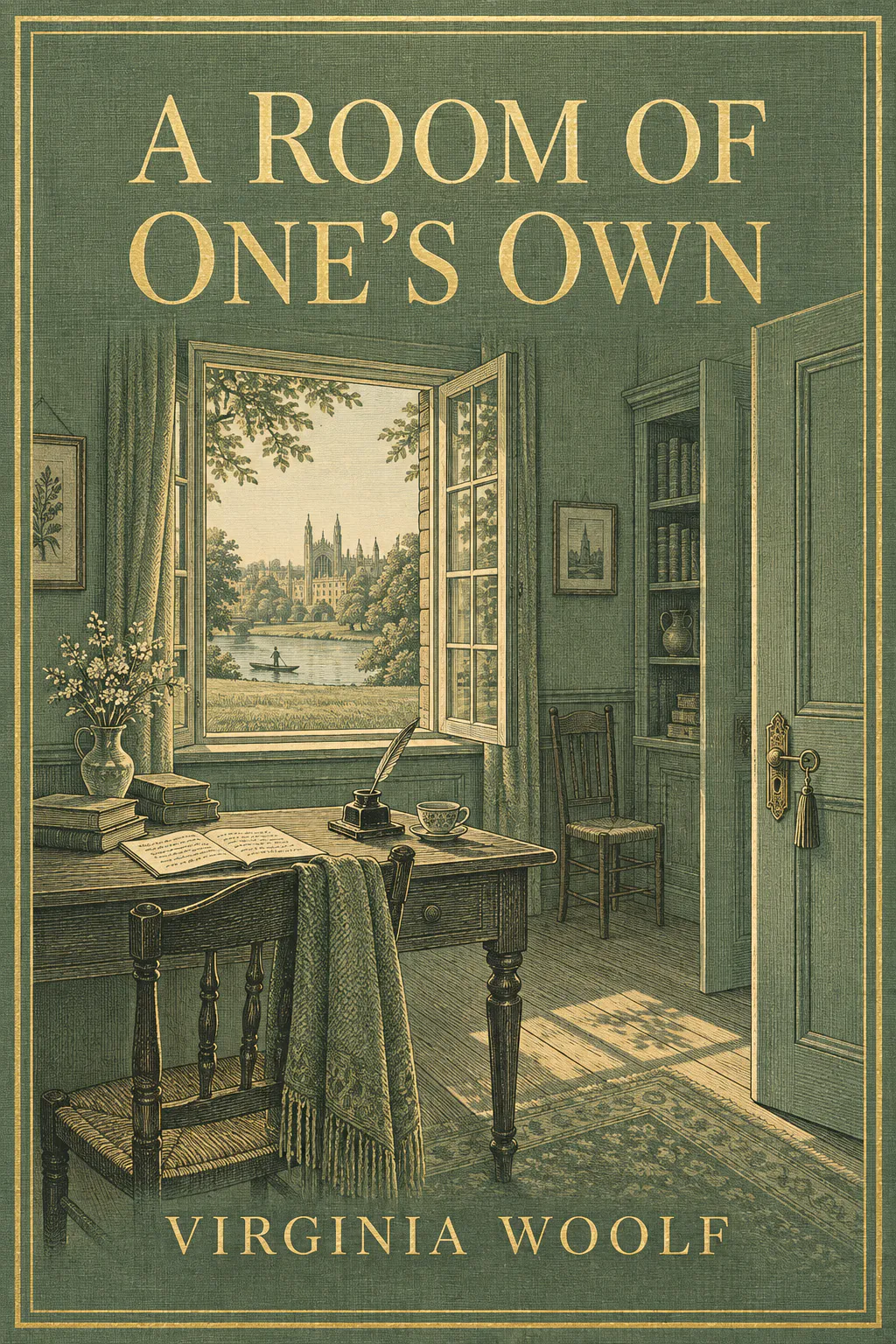
Contains spoilers for the entire book.
Discussion topics
Topic 01 of 08
Money and a room
How convincing do you find Woolf's claim that a woman must have money and a room of her own if she is to write fiction?
Keep the conversation going
- Why does she say her aunt's legacy of five hundred a year mattered more to her than the vote?
- What would a room of one's own mean for a writer today?
There is no single right answer. Bring your own reading.
Discussion topics
How convincing do you find Woolf's claim that a woman must have money and a room of her own if she is to write fiction?
Keep the conversation going
- Why does she say her aunt's legacy of five hundred a year mattered more to her than the vote?
- What would a room of one's own mean for a writer today?
What do the small humiliations at Oxbridge, being waved off the turf and turned away from the library, add up to?
Keep the conversation going
- How do the luncheon at the men's college and the dinner of prunes and custard at Fernham make the argument for her?
- Why do you think she chooses to begin with scenes rather than statistics?
What does the narrator learn from the shelves of books about women written by men?
Keep the conversation going
- Why does the sketch of Professor von X make her angry, and what does she then learn from her own anger?
- What does she conclude about why men have written so much about women?
How did you respond to the imagined life of Shakespeare's equally gifted sister?
Keep the conversation going
- Why does Woolf insist that such a woman would have been driven to madness or death rather than to the stage?
- Where else in history can you think of talent that was never allowed to show itself?
What does Woolf value in the writers she traces, from Aphra Behn to Jane Austen and the Brontës?
Keep the conversation going
- Why does she think Charlotte Brontë's anger damaged her novels while Austen wrote without it?
- Do you agree that a writer's grievances should be kept out of their work?
Why does the sentence "Chloe liked Olivia" in Mary Carmichael's novel strike the narrator so forcefully?
Keep the conversation going
- What does she think fiction has missed by showing women almost only in relation to men?
- How has fiction changed since, in the way it shows friendships between women?
What does Woolf mean when she argues that a great mind is androgynous?
Keep the conversation going
- How does the sight of a man and a woman getting into a taxi lead her to that idea?
- Is it a hopeful idea, a retreat from her argument, or both?
Why does Woolf speak through an invented narrator, "call me Mary Beton, Mary Seton, Mary Carmichael", rather than in her own name?
Keep the conversation going
- How does the essay's wandering, story-like method help or hinder its argument?
- What does her closing challenge to the women in her audience ask of them, and of you?
There is no single right answer. Bring your own reading.