
A Tale of Two Cities
Charles Dickens
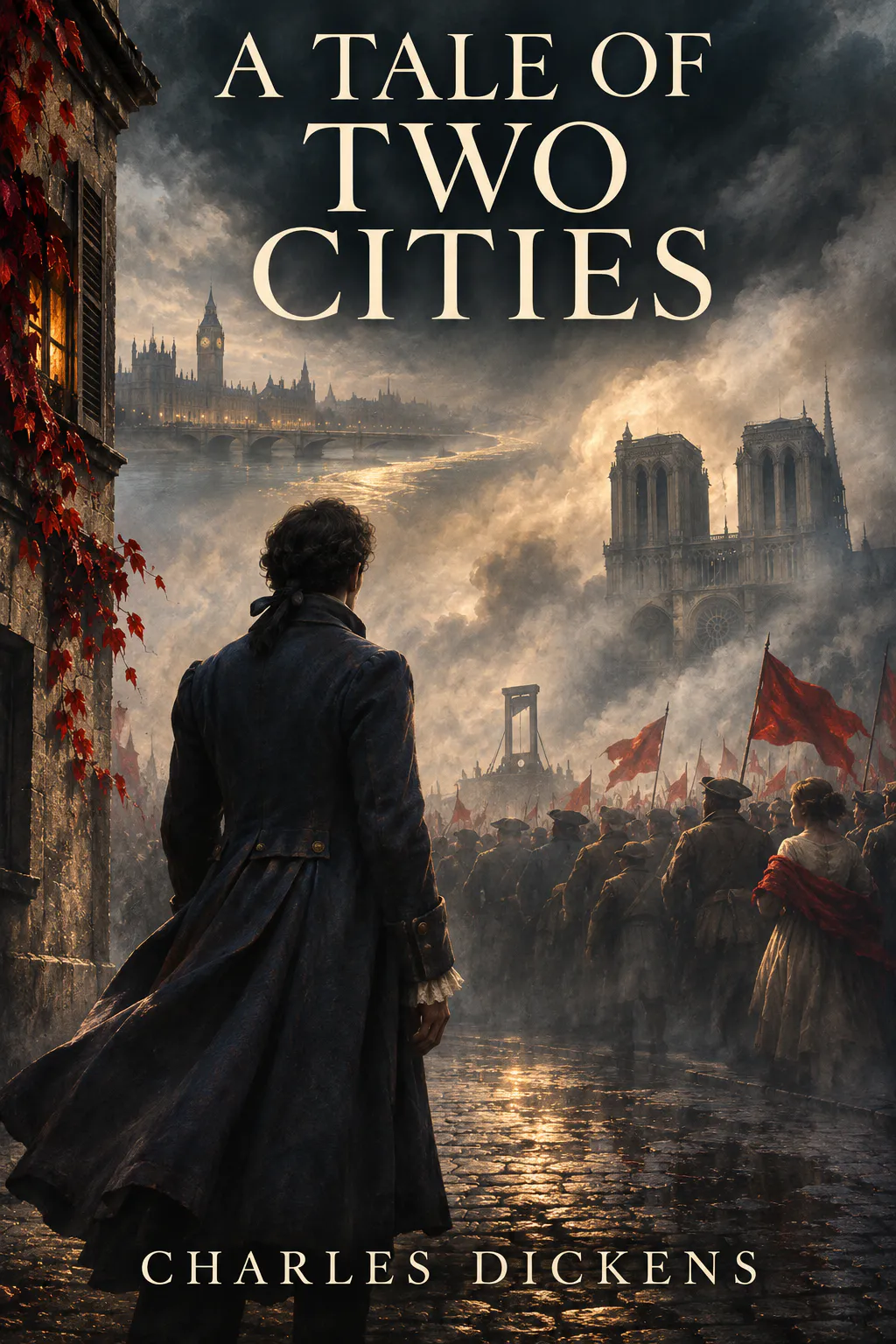
Contains spoilers for the entire book.
Discussion topics
Topic 01 of 08
Recalled to life
How does the idea of being "recalled to life" run through the novel, from Dr Manette's release from the Bastille to its final pages?
Keep the conversation going
- Which characters are brought back from some kind of death, and what does each return cost?
- Did the phrase mean something different to you by the end than it did in the opening chapters?
There is no single right answer. Bring your own reading.
Discussion topics
How does the idea of being "recalled to life" run through the novel, from Dr Manette's release from the Bastille to its final pages?
Keep the conversation going
- Which characters are brought back from some kind of death, and what does each return cost?
- Did the phrase mean something different to you by the end than it did in the opening chapters?
The opening insists the age was both the best and the worst of times. Where does the novel show both at once?
Keep the conversation going
- Does Dickens seem to be writing about 1775, about his own England of 1859, or about both?
- Which of the two do you think the book leaves you believing it was more?
What makes Sydney Carton, idle and self-mocking, the moral centre of the book?
Keep the conversation going
- Why does he believe his life has no value, and is he right about himself?
- What does the novel do with his likeness to Charles Darnay?
Is Madame Defarge a monster, or a woman the old regime made into one?
Keep the conversation going
- How did learning her history, so late in the book, change the way you saw her?
- What does her knitted register say about memory, grievance and revenge?
How does the scene of the Marquis's carriage killing a child explain the Revolution before it happens?
Keep the conversation going
- Who in the novel pays for the aristocracy's cruelty, and is any of that payment just?
- Does Dickens sympathise with the revolutionaries, fear them, or both?
What does Dr Manette's return to his shoemaker's bench tell us about trauma and recovery?
Keep the conversation going
- Why does Lucie matter so much to his healing?
- How did you feel when his own buried letter was used against Darnay?
Can Charles Darnay escape the crimes of his family, and should he have to?
Keep the conversation going
- Why does he go back to Paris, knowing the danger he will face there?
- Is his trial before the revolutionary tribunal justice, vengeance, or something else?
Is Carton's sacrifice a triumph, a tragedy, or both?
Keep the conversation going
- What does his vision of the future, on the scaffold, suggest Dickens hoped for after the Terror?
- Does the ending feel earned to you, or too neat?
There is no single right answer. Bring your own reading.