
Leviathan
Thomas Hobbes
Contains spoilers for the entire book.
Discussion topics
Topic 01 of 08
The state of nature
What does Hobbes mean when he says that without a common power life would be solitary, poor, nasty, brutish and short?
Keep the conversation going
- Do you find his picture of human nature too dark, or simply honest?
- Where in history or the present do you see the state of nature he describes?
There is no single right answer. Bring your own reading.
Discussion topics
What does Hobbes mean when he says that without a common power life would be solitary, poor, nasty, brutish and short?
Keep the conversation going
- Do you find his picture of human nature too dark, or simply honest?
- Where in history or the present do you see the state of nature he describes?
Why does Hobbes argue that people are roughly equal, and why does he think that equality leads to war rather than peace?
Keep the conversation going
- What are the three causes of quarrel he names?
- How do his examples of locking doors and carrying arms make the case?
What are Hobbes's laws of nature, and how do they lead us out of the war of all against all?
Keep the conversation going
- Why does he think keeping covenants is the foundation of justice?
- What happens to justice where there is no power to enforce promises?
How does Hobbes imagine people creating the sovereign, and why does he think the sovereign is not bound by the covenant itself?
Keep the conversation going
- Does consent given out of fear still count as consent?
- What would you be giving up by entering his covenant?
Why does Hobbes insist that sovereign power must be undivided and almost unlimited?
Keep the conversation going
- Is the danger of tyranny worse than the danger of civil war, as he believes?
- How does the English Civil War, raging as he wrote, shape his argument?
What rights does Hobbes think subjects keep, even under the sovereign, such as the right to defend their own lives?
Keep the conversation going
- Does he leave any room for disobedience?
- When does a subject's duty to the sovereign end?
Why does Hobbes devote so much of the book to religion and Scripture?
Keep the conversation going
- What is the Kingdom of Darkness he attacks in the last part?
- How does he think religion should relate to the power of the state?
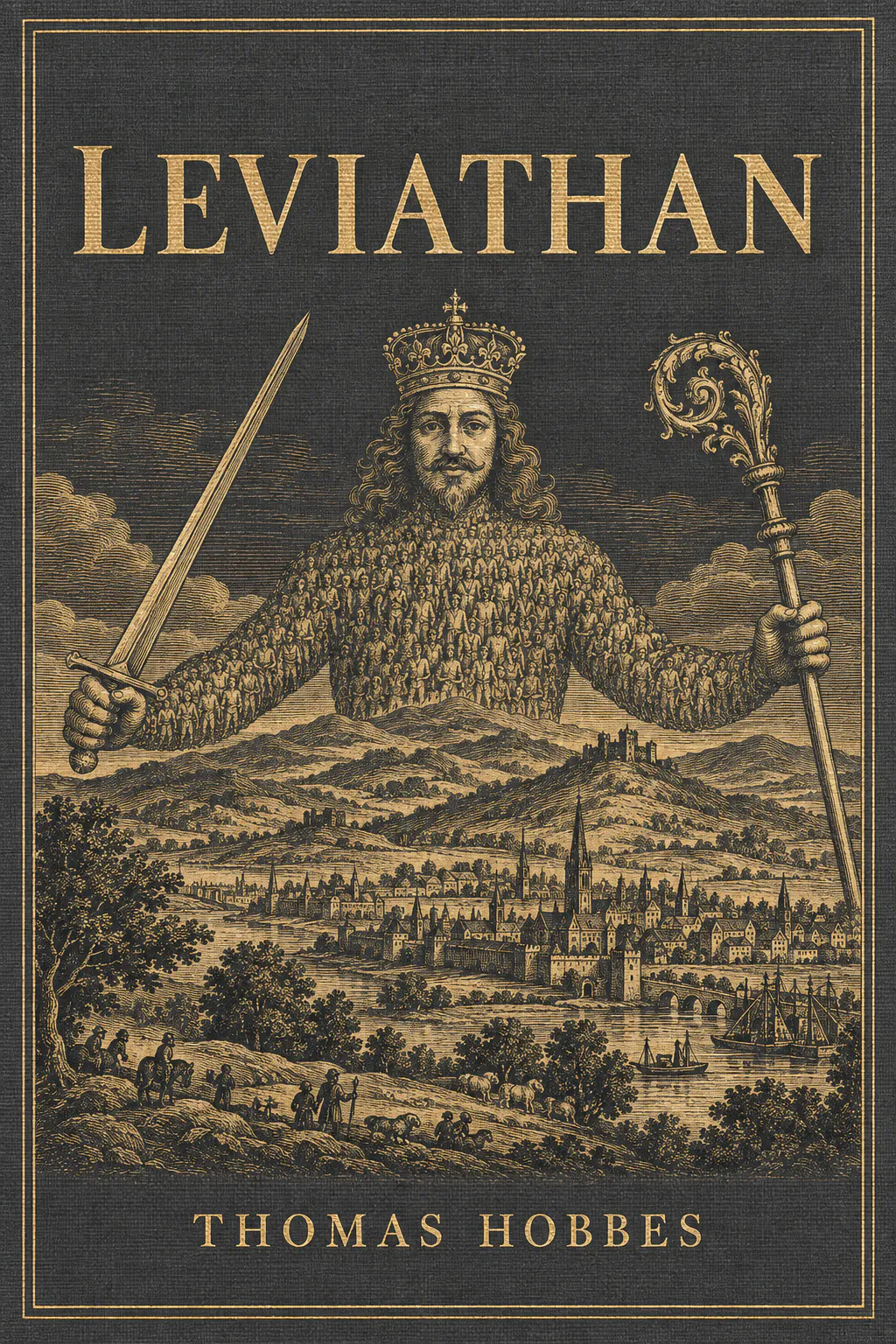
What does the famous image of a giant made of many small people, holding a sword and a crozier, tell you about Hobbes's idea of the state?
Keep the conversation going
- Is the image comforting or frightening?
- How much of modern politics still rests on Hobbes's bargain of obedience for safety?
There is no single right answer. Bring your own reading.