
Utopia
More, Thomas, Saint
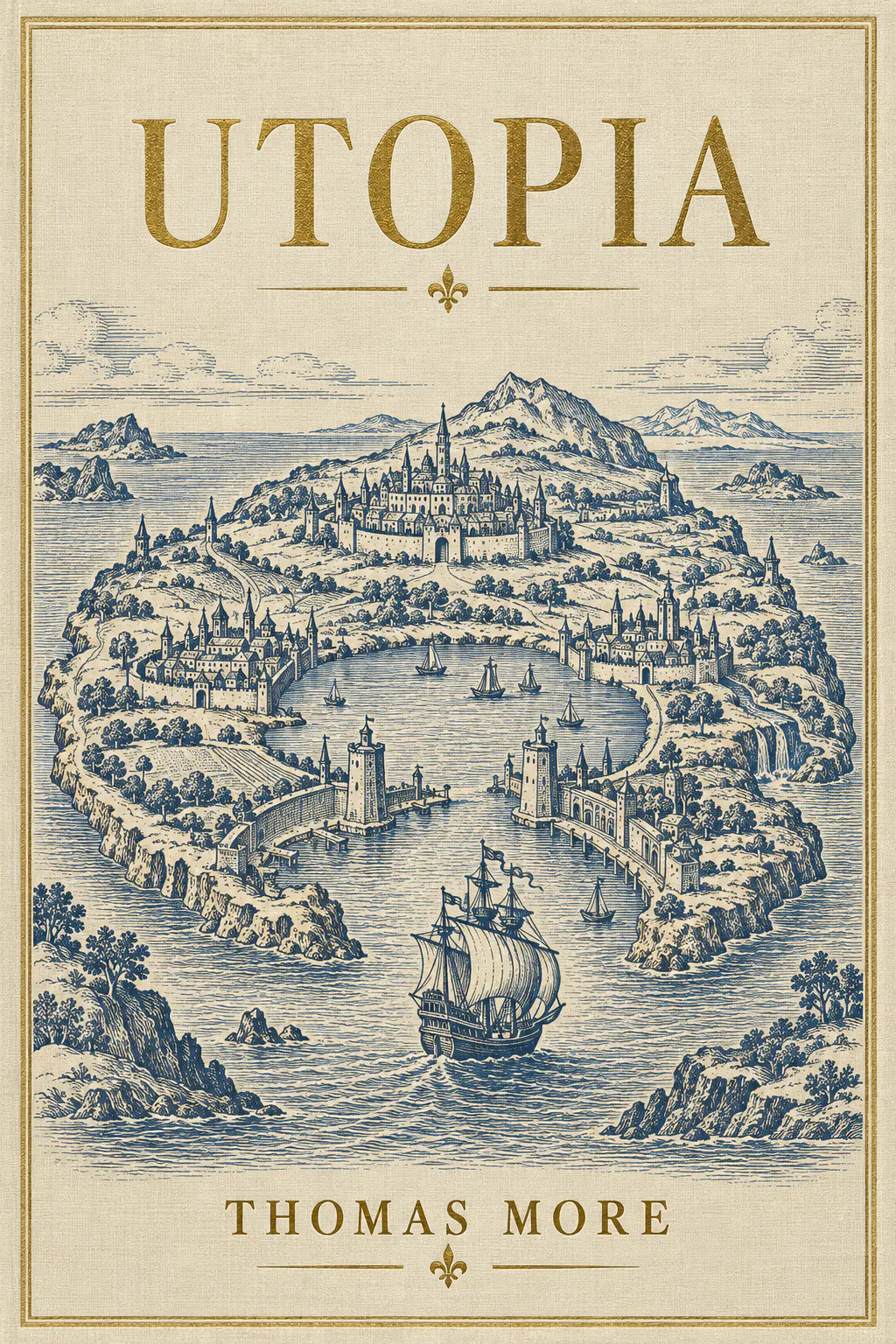
Utopia
FictionClassicsNonfictionPhilosophyPolitics & Society
12 chapters·3h 54m listening
3.55from 85,634 ratingson Goodreads
"Utopia" by Saint Thomas More is a work of fiction and socio-political satire written in Latin and published in 1516. This frame narrative depicts a fictional island society and its religious, social, and political customs. Through dialogue between More and the traveler Raphael Hythlodaeus, the work explores contemporary European problems—warfare, theft, poverty, and enclosure—while describing an alternative society that challenges Renaissance notions of governance. The book questions whether philosophers should work within flawed political systems or pursue radical ideals.
Contains spoilers for the entire book
- Themes
- Atmosphere
About the book
Written in Latin and first published in 1516, Utopia is presented by Thomas More as a conversation with Raphael Hythloday, a traveller he says he met in Antwerp. In the first book they discuss the troubles of England, including enclosures that turn farmland into sheep pasture and harsh laws that hang thieves without addressing the poverty that drives them to steal. In the second book Hythloday describes the island of Utopia, where property is held in common, money has no use, everyone works and many religions are tolerated. More coined the island’s name from Greek words meaning “no place”, and the book’s mix of serious proposal and irony has left readers debating ever since how far he meant it, while giving the language a word for an ideal society.
Characters
Raphael Hythloday — Traveler and principal speaker
An experienced traveler who describes the institutions and customs of the island of Utopia.
Thomas More — Dialogue participant
A literary version of the author who listens to Hythloday and questions his political conclusions.
Peter Giles — Dialogue participant
More's Antwerp acquaintance, who introduces him to Hythloday and joins the discussion.
Cardinal Morton — Figure in Hythloday's recollection
An English statesman whose household provides the setting for a remembered debate about justice and punishment.
About the author
Thomas More (1478–1535) was an English lawyer, scholar and statesman. Born in London, the son of a judge, he studied at Oxford and trained in the law at Lincoln’s Inn, and became one of the leading humanists of his age and a close friend of Erasmus, who dedicated The Praise of Folly to him. He wrote Utopia in Latin and published it in 1516, and also left an unfinished history of King Richard III. More rose in the service of Henry VIII and succeeded Cardinal Wolsey as Lord Chancellor in 1529, in which office he vigorously pursued Protestant reformers. He resigned in 1532 as the king broke with Rome, and when he refused to swear the oath acknowledging Henry’s new marriage and rejecting the pope’s authority, he was imprisoned in the Tower of London and beheaded for treason in July 1535. The Catholic Church canonised him in 1935.