
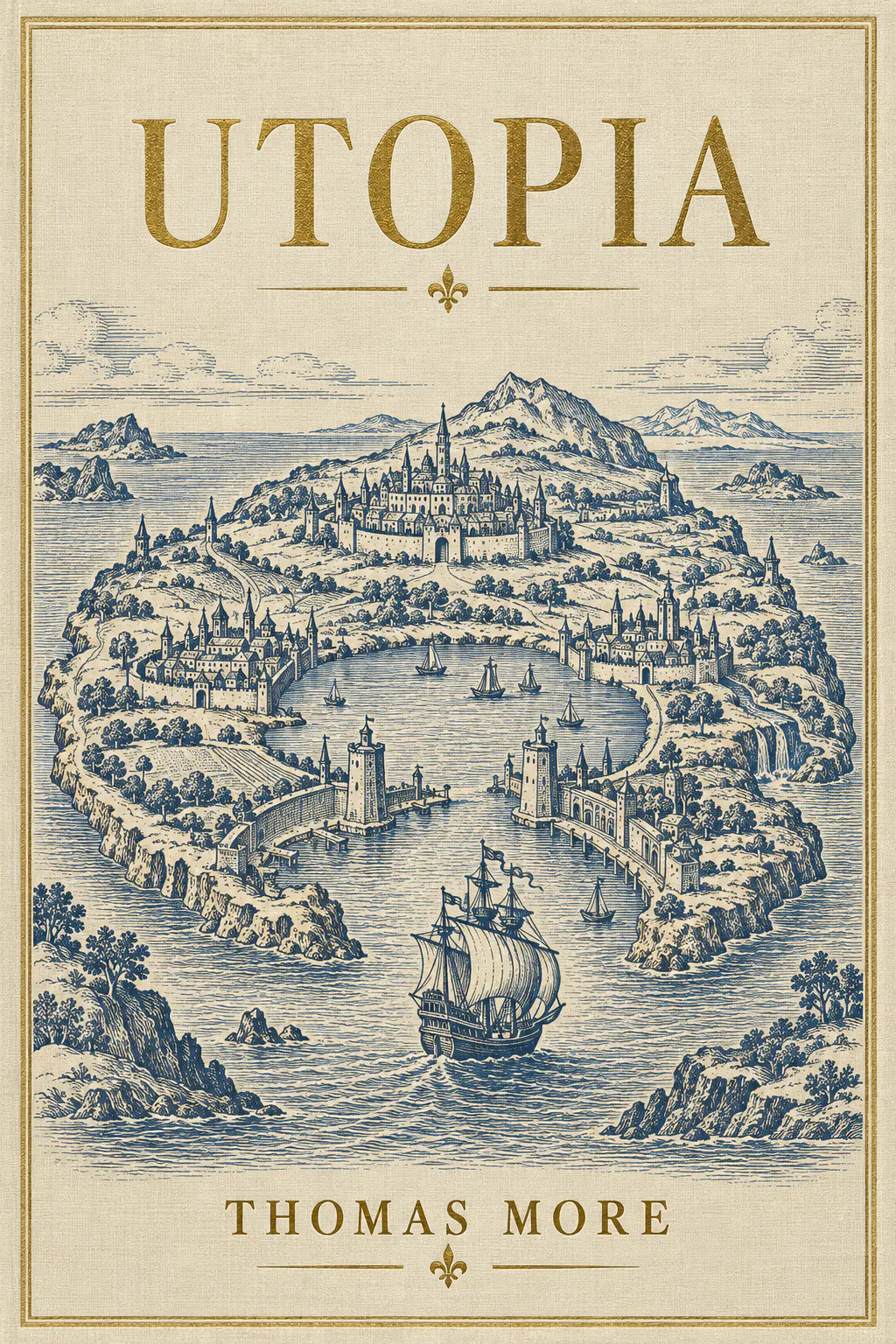
Utopia
More, Thomas, Saint
Contains spoilers for the entire book.
Discussion topics
Topic 01 of 08
Raphael Hythloday
What do you make of Raphael Hythloday, the traveller who has seen Utopia and refuses to serve any king?
Keep the conversation going
- Why does More put the most radical ideas in the mouth of an invented character?
- What does the name Hythloday, roughly "speaker of nonsense", suggest about how to read him?
There is no single right answer. Bring your own reading.
Discussion topics
What do you make of Raphael Hythloday, the traveller who has seen Utopia and refuses to serve any king?
Keep the conversation going
- Why does More put the most radical ideas in the mouth of an invented character?
- What does the name Hythloday, roughly "speaker of nonsense", suggest about how to read him?
How does the dinner-table discussion in Book One turn hanging thieves into an argument about enclosures and poverty?
Keep the conversation going
- What did you make of the claim that sheep are devouring men?
- Which of Hythloday's criticisms of England still apply to societies today?
Should a wise person serve as an adviser to a ruler, as More's character suggests, or keep out of it, as Hythloday insists?
Keep the conversation going
- Is it better to soften advice to make it heard, or to say exactly what you think?
- What might More, who later served Henry VIII, have been thinking as he wrote this?
How does Utopia manage without money or private property, and what does that cost its people?
Keep the conversation going
- Did the Utopian way of life appeal to you, or repel you?
- Why does Hythloday think property is the root of injustice?
Why do the Utopians use gold for chamber pots and slaves' chains?
Keep the conversation going
- What does the story of the ambassadors arriving in gold and jewels show?
- What would our society look like if it treated wealth this way?
How do the Utopians balance work, leisure and pleasure, and what do they count as true pleasure?
Keep the conversation going
- Is a six-hour working day for everyone a dream or a practical idea?
- What do you make of the rules that govern their free time?
How do slavery, mercenary wars and religious tolerance sit together in More's ideal state?
Keep the conversation going
- Did any of the Utopians' customs shock you?
- Is Utopia really an ideal, or a puzzle meant to make us think?
What does the title, meaning both "no place" and "good place", tell you about how to read the book?
Keep the conversation going
- Why does More's narrator end by saying there are many things in Utopia he wishes rather than expects to see?
- What would your own Utopia keep or change from More's?
There is no single right answer. Bring your own reading.